Chatarra.
Un catanare cargado de chatarra viene llegando por la ruta cósmica del tiempo. Como un autobús cumpliendo su horario, cada Navidad regresa este estúpido carnaval de consumo, adornos inútiles y sentimientos artificiales a dizque conmemorar el cumpleaños de Chuíto. Un símbolo de lo peor de la dinámica socioeconómica del capitalismo despliega y arma sus barracones de circo en el campo de la siquis colectiva; una avanzada del peor ejército mercenario penetra y se instala cómodamente en el territorio ya no soberano de nuestras conductas para hacer estragos de lo poco que nos queda de autóctono y originario. Las huestes de soldados de fortuna secuestran y violan nuestros infantes con nuestro permiso, sembrando en el vientre de sus tiernas mentes las ideas que en el futuro los harán sus cómplices en la predación de lo nuestro.
Los invasores levantan sus estandartes de pinos y bolitas, sus Santas barbudos y sus lazos de regalo; el aire retumba de las peanas de victoria de villancicos, gaitas y músicas navideñas mientras nuestras poblaciones son arreadas prisioneras a las mazmorras de los centros comerciales donde se transan las miserables ganancias de las horas-hombre sustraídas de sus vidas por bienes suntuarios e inútiles en la atmósfera surrealista del comercio.
En nuestro propio suelo, sin el menor reparo ante nuestra mirada atónita, los amigos del imperio invasor compiten en actos de sumisión y entreguismo. Desfilan con fervor los colaboracionistas, cada cual lidiando por prostrarse con más gracia y donosura en abyecta adoración de los símbolos del mercado que los ha privado de su esencia interior dejando en su lugar un corazón falso de hojalata.
Festones y guirnaldas por doquier, paisajes nevados con carrozas volantes arrastradas por renos, nuestro país deja de ser nuestro y se convierte en lo que en realidad es y seguirá siendo si no actuamos: un bastión más de la penetración cultural que precede a las invasiones reales. Las hamburguesas y los sannicolases llegan antes que las bombas, aplanan el terreno sicosocial para moldear nuestro pueblo a la aceptación e idolatría de los productos chatarra que vomita sobre nosotros la industria de lo artificial y accesorio a cambio de la renta petrolera, igual que otrora pasó con nuestro oro y piedras preciosas a cambio de espejos y vidrios coloreados.
Los vidrios coloreados vinieron acompañados de la ponzoña judeocristiana que reemplazó nuestra cosmogonía; nuestro pueblo rinde culto a la misma cruz en cuyo nombre se libraron las más horrendas guerras, y se prostra de hinojos ante sus purpurados parlanchines de feria buscando redimirse de pecados que nos son ajenos y de los cuales no somos culpables... pero he allí el sublime truco de la fe, el mismo que nos condenó al trabajo esclavo con la promesa de un nirvana después de esta vida, cuyos frutos entregamos como ofrenda al altar blasfemo e hipócrita que usurpa el legado del Cristo socialista que debería ser ejemplo de conducta de sus pastores.
La revolución de la que somos protagonistas debe tomar como suya la tarea de recuperar los espacios sicosociales ocupados durante cinco siglos por fuerzas alienígenas para las cuales somos, y así nos lo han hecho creer, seres inferiores. Hasta llegó a discutirse si teníamos o no algún componente espiritual (alma, le dicen por allí). Con amos de esa calaña ordenando nuestras vidas, muy poco será lo que podamos avanzar, ya que grava demasiado el lastre del sentimiento de inferioridad al momento de liberarnos de los yugos. Esclavos timoratos de la luz de la autodeterminación, ya lo hemos visto antes, se resisten a dejarse quitar las confortables cadenas de la mansedumbre; se hicieron adictos al látigo.
Librémonos del lastre intelectual. Fuera cruces, miquimauses, santas y supermanes. Para avanzar ligero, esta revolución debe sacudirse de encima esa chatarra.
Franco Munini.
jueves, 25 de diciembre de 2008

sábado, 13 de diciembre de 2008
Enmienda y autonomía de las bases críticas.
El tema de la enmienda, y la consecuente posibilidad de prolongar una manera de hacer política que, si bién intenta favorecer a las mayorías, ha tratado de acorralar y pastorear a los movimientos de izquierda y sus parientes más combativos, los movimientos libertarios antiestado y antisistema, nos conminan a asumir una postura racional que vaya más allá del simple apoyo incondicional a la persona que nos ha abierto la posibilidad de combatir al imperialismo y a los lacayos de la oligarquía criolla a la luz pública, y no desde trincheras clandestinas en contínua paranoia de persecuciones represivas. Que vaya más allá del rechazo por principios considerando que lo que está en juego no es sólo un tecnicismo legal.
Sobre la percepción de que la enmienda AUMENTA nuestros derechos, no hay duda: nadie debería impedirme votar cuantas veces quiera por un presidente. Más allá de eso, nos toca tratar de asegurar (porque no sabemos si de hecho ganará el "SÍ") que la enmienda sea aprobada, no tanto por la enmienda en sí, sino por el efecto catalizador estimulante o desanimador que ese resultado pueda producir sobre el entusiasmo de las bases populares en la lucha por su emancipación.
La piquiña que esa enmienda produce es que much@s creen que eso sólo favorece a Hugo Rafael Chávez Frías... cuando claramente es una opción que se abre también a l@s excelentes, brillantes y preclar@s candidat@s que la oposición y el mismo chavismo o escisiones de él puedan presentar.
Dicho de otra manera, quiero que sean los ciudadanos los que tengan la potestad de decidir si quieren que un presidente repita más de una vez, a través de sus votos, y que la Constitución no sea una barrera para ello. De todas formas la propuesta será sometida a referéndum, así que "esta tiranía" se someterá, una vez más, al voto popular. Por décimoquinta vez. Extraña tiranía, ¿verdad?, ésta, que recurre a la consulta ciudadana y al poder originario en vez de dejarse manejar por un puñado de legisladores partidocratas enflusaos.
Por cierto, esa potestad de hablar y expresarnos en la más absoluta libertad, aún contraviniendo lo establecido en el Código Orgánico Procesal Penal, es justamente una de las razones por las que no solo votaré "SÍ" en el referéndum, sino que le daría mi voto a Chávez si vuelve a postularse, con tal que siga permitiendo que nos expresemos y actuemos en libertad.
Gracias a esa libertad es que se generan nuevos espacios autónomos de lucha antiimperialista y de empoderamiento popular. Chávez y el estado/partido, a pesar de las buenas intenciones, siguen siendo parte de la estructura de dominación al tratar de estatizar la dinámica de los movimientos populares; sin embargo, ya no hay más esa barrera represiva tan cara a la cuarta que antes impedía las manifestaciones independientes y alternativas de los procesos de emancipación y empoderamiento popular.
Esos procesos libertarios no se amoldan al PSUV por principios ni se dejan fagocitar por las estructuras formales o informales del estado, pero lo apoyan en cuanto les garantiza espacios de acción y soluciona algunos de los problemas del colectivo de base que de otra manera harían más difícil su avance. Son movimientos que rara vez hacen irrupción en el escenario público... por ahora; hay algunos indicios de que, a raiz de las presiones del estado formal infiltrado o infectado y su consecuente falta de incisividad en el combate a las estructuras reaccionarias, van a empezar a verse con más frecuencia acciones mucho más contundentes que las del Colectivo La Piedrita (saludos, compas). Y esto es algo que a la derecha le va a complicar seriamente los planes, ya que son acciones que Chávez podrá quizás condenar de boca, pero no de hecho.
Casos como las acciones del sicariato matando dirigentes sindicales y líderes campesinos, o el narcoparamilitarismo en los barrios o la judicialización y criminalización de los protagonistas de las tomas de tierra o la impunidad y falta de castigo a los criminales que fomentaron el paro petrolero y otras acciones desestabilizadoras, todos ellos auspiciados por las fuerzas reaccionarias desde adentro o desde afuera del estado formal no encuentran respuesta por parte de ese mismo estado boliburgués.
Esa bomba de tiempo no está dispuesta a ser utilizada por las fuerzas reaccionarias, sus enemigas naturales, ni por la demagogia captavotos de un partido: es un elemento de preocupación tanto para los dirigentes de oposición en los espacios conquistados el pasado 23N como para el "boliburguestado", que quisiera amansarlo y direccionarlo.
Esos polvos trajeron estos barros. La dinámica parece orientarse a una confrontación triple en la que sólo Chavez podrá mediar, y para ello deberá radicalizar la lucha contra los males endémicos de nuestra sociedad que nuestro nefasto sistema judicial sigue promoviendo.
Franco Munini.
Sobre la percepción de que la enmienda AUMENTA nuestros derechos, no hay duda: nadie debería impedirme votar cuantas veces quiera por un presidente. Más allá de eso, nos toca tratar de asegurar (porque no sabemos si de hecho ganará el "SÍ") que la enmienda sea aprobada, no tanto por la enmienda en sí, sino por el efecto catalizador estimulante o desanimador que ese resultado pueda producir sobre el entusiasmo de las bases populares en la lucha por su emancipación.
La piquiña que esa enmienda produce es que much@s creen que eso sólo favorece a Hugo Rafael Chávez Frías... cuando claramente es una opción que se abre también a l@s excelentes, brillantes y preclar@s candidat@s que la oposición y el mismo chavismo o escisiones de él puedan presentar.
Dicho de otra manera, quiero que sean los ciudadanos los que tengan la potestad de decidir si quieren que un presidente repita más de una vez, a través de sus votos, y que la Constitución no sea una barrera para ello. De todas formas la propuesta será sometida a referéndum, así que "esta tiranía" se someterá, una vez más, al voto popular. Por décimoquinta vez. Extraña tiranía, ¿verdad?, ésta, que recurre a la consulta ciudadana y al poder originario en vez de dejarse manejar por un puñado de legisladores partidocratas enflusaos.
Gracias a esa libertad es que se generan nuevos espacios autónomos de lucha antiimperialista y de empoderamiento popular. Chávez y el estado/partido, a pesar de las buenas intenciones, siguen siendo parte de la estructura de dominación al tratar de estatizar la dinámica de los movimientos populares; sin embargo, ya no hay más esa barrera represiva tan cara a la cuarta que antes impedía las manifestaciones independientes y alternativas de los procesos de emancipación y empoderamiento popular.
Esos procesos libertarios no se amoldan al PSUV por principios ni se dejan fagocitar por las estructuras formales o informales del estado, pero lo apoyan en cuanto les garantiza espacios de acción y soluciona algunos de los problemas del colectivo de base que de otra manera harían más difícil su avance. Son movimientos que rara vez hacen irrupción en el escenario público... por ahora; hay algunos indicios de que, a raiz de las presiones del estado formal infiltrado o infectado y su consecuente falta de incisividad en el combate a las estructuras reaccionarias, van a empezar a verse con más frecuencia acciones mucho más contundentes que las del Colectivo La Piedrita (saludos, compas). Y esto es algo que a la derecha le va a complicar seriamente los planes, ya que son acciones que Chávez podrá quizás condenar de boca, pero no de hecho.
Casos como las acciones del sicariato matando dirigentes sindicales y líderes campesinos, o el narcoparamilitarismo en los barrios o la judicialización y criminalización de los protagonistas de las tomas de tierra o la impunidad y falta de castigo a los criminales que fomentaron el paro petrolero y otras acciones desestabilizadoras, todos ellos auspiciados por las fuerzas reaccionarias desde adentro o desde afuera del estado formal no encuentran respuesta por parte de ese mismo estado boliburgués.
Esa bomba de tiempo no está dispuesta a ser utilizada por las fuerzas reaccionarias, sus enemigas naturales, ni por la demagogia captavotos de un partido: es un elemento de preocupación tanto para los dirigentes de oposición en los espacios conquistados el pasado 23N como para el "boliburguestado", que quisiera amansarlo y direccionarlo.
Esos polvos trajeron estos barros. La dinámica parece orientarse a una confrontación triple en la que sólo Chavez podrá mediar, y para ello deberá radicalizar la lucha contra los males endémicos de nuestra sociedad que nuestro nefasto sistema judicial sigue promoviendo.
Franco Munini.
viernes, 12 de diciembre de 2008
La ruleta.
Antes de que se pusiera el polvo después de la cabalgata electoral que nos condujo al 23 de noviembre, antes de que el PSUV o el colectivo hayamos trazado una estrategia de gobierno tras los resultados de esa contienda, ya se nos lanza a otra campaña para captar votos tratando de surfear la ola de la popularidad y el arrastre de los últimos meses en base a la proyección optimista del margen diferencial de votos obtenidos semanas atrás.
No recuerdo que nos hayas pedido permiso, Hugo, ni que nos hayas consultado. De hecho, desconocemos qué mecanismo interno del partido te dá la potestad de tomar decisiones unilaterales sin por lo menos preguntar nuestras opiniones. ¿Era el momento adecuado?
¿Recuerdas que formamos batallones para debatir internamente los asuntos relacionados al partido? ¿Te suena aquello de “Todo el poder para el pueblo”? ¿Te suena eso de “Con Chávez manda el pueblo”? Nosotros aún creemos en esas consignas, Hugo.
Pero nada, ya lanzaste a rodar la bolita. Un solo artículo sobre el tapete. Una asamblea que no te pone obstáculos agota la segunda posibilidad de hacer cambios en la constitución, la misma asamblea que te empegostó con un viaje de artículos crípticos y sospechosos la propuesta del año pasado, haciéndola indigesta para los votantes menos convencidos.
Y sólo hay dos resultados posibles: ganar o perder. Por más que invoquemos a Ribas, por fuerte que sea este nuevo chantaje emocional al pueblo que votará para aprobar la enmienda, incluyéndome, no podemos olvidar que hace un año perdimos un referéndum.
Así que vamos a hacer un ejercicio útil: una proyección de escenarios posibles para el día 28 de febrero 2009, cuando ya tendremos a mano los resultados, para anticiparnos a las consecuencias de cada uno de los resultados posibles y como incorporar y adaptarnos a esas nuevas variables en el proyecto de desarrollo de país que nos hemos trazado. Estás invitado a participar, Hugo, ya que como presidente de la República Bolivariana de Venezuela y presidente del PSUV debes oír nuestras deliberaciones.
Supongamos, y ojalá que así sea, que ganamos como colectivo el derecho de reelegir a un presidente cuantas veces nos parezca conveniente. En este caso a tí... o algún otro; se rumora la especie que esta posibilidad es válida sólo porque nos permite reelegirte a tí, pero lo cierto es que si no ganas en el 2012 esa posibilidad se le abre a otro u otra, y ten en cuenta de que antes de eso hay la posibilidad de que la oposición convoque a un revocatorio que, de serte adverso, coloca a otra persona en Miraflores antes del 2012.
Pero sigamos con la hipótesis de nuestra victoria en febrero 2009. La oposición oscilará entre el desánimo y la hostilidad abierta, presentándonos al mundo como una dictadura vitalicia y aumentando la intensidad de sus ataques y actos de sabotaje contra la obra de gobierno, y debemos estar prevenidos para esa eventualidad fortaleciendo la defensa de la revolución por varias vías.
Sin embargo, me preocupa que esa victoria tenga un efecto adormecedor sobre los alcaldes y gobernadores recién electos, quienes la van a presentar como un logro de sus gestiones olvidando que hay otros frentes, más pertinentes a sus funciones, a los que deben dedicar sus esfuerzos para beneficio de la colectividad. No sólo son los votos que sus respectivas circunscripciones electorales aporten al triunfo de la enmienda los parámetros de gestión que interesan al colectivo, y habrá que recordárselo con frecuencia para que no lo esgriman como excusa de las posibles fallas de sus desempeños.
Un aspecto positivo que se puede esperar es el fortalecimiento de las instancias de base, desde los batallones del PSUV a las diversas estructuras del poder popular y comunal, a quienes se deberá esa posible victoria. ¿Empezará de una buena vez la horizontalización del estado, la optimización de sus partes menos eficientes, la eliminación de sus apéndices superfluos? ¿Se abrirá al fin un proceso de integración y apertura de ese bastión del imperialismo que anida en nuestra industria petrolera, ese caballo de Troya que mantiene a resguardo los privilegios de sus empleados repartiendo dádivas a las misiones? ¿Cambiará de una buena vez el discurso hostil hacia los ciudadanos que, sin ser golpistas ni oligarcas ni pitiyanquis, no comparten todavía, y en particular gracias a ese discurso hostil, la simpatía hacia el proceso?
Veremos. Mucho depende del empoderamiento de las bases y del surgimiento, desarrollo y fortalecimiento de los liderazgos locales, que en cualquier caso ven hoy limitadas sus aspiraciones por el axioma que le restriegas en la cara sobre la imprescindibilidad de tu liderazgo, Hugo, y el de los funcionarios con los que insistes en gobernar. Caldo de cultivo para recelos y conspiraciones internas indeseables.
Y ahora hablemos de la posibilidad que nadie se atreve a mencionar, como si no nos hubiese pasado antes: que se pierda el referéndum. ¿Cuál va a ser tu reacción, Hugo? ¿Cómo crees que va a impactar eso en el estado de ánimo del chavismo? ¿Seguirán aportando sus esfuerzos con el mismo entusiasmo las personas que de una manera u otra colaboran en la construcción del país que deseamos? ¿Tendrán el mismo peso que hoy las afirmaciones sobre tu popularidad? ¿Cómo reaccionarán las corrientes de oposición? ¿Cómo quedamos allá afuera, en boca de las trasnacionales de la desinformación, al regalarles ese premio?
Debe haber un plan para esa contingencia, Hugo. Y si no nos los presentas tú, lanzado como estás en una campaña en la que sólo tienen cabida los aplausos y las estimaciones optimistas, nos toca empezar a elaborarlo nosotros desde ya, por si acaso, con los pies bien puestos sobre la tierra.
Porque hay la posibilidad de que las reacciones de ambos lados sean viscerales, y la paz del país debe ser nuestro objetivo primordial, así que te recomiendo que compartas con nosotros tus planes, que espero los tengas, para esa contingencia. A corto, mediano y largo plazo.
La derrota de la enmienda puede también ser motor para una consolidación más autónoma de los movimientos populares y eventualmente de las bases del PSUV, que reclamarán con pleno derecho hacer llegar sus aspiraciones y proyectos a niveles de ejecución y acción sin la tutela y las barandas de la burocracia estatal o partidista. Esto no es malo, ya que es la maduración obvia de esos movimientos que no por ello dejan de ser leales al proceso progresista bolivariano; mantener la coherencia y la interacción efectiva de ese fervor de pueblo en emancipación requerirá de más que las arengas y cadenas televisivas de las presentes campañas. ¿Estás preparado a gerenciar un país que expresa desde sus entrañas, desde todas las regiones, maneras más variadas y propias de transitar hacia el Socialismo del siglo XXI? Eso ocurrirá en cualquier caso, y bienvenida esa diversidad que busca sus caminos antiimperialistas y libertarios gracias al estímulo que le has dado.
Te alerté en agosto 2007 sobre la posibilidad de que el referéndum del 2D pudiera representar, como de hecho lo fue, tu primer revés electoral. En esa ocasión señalé que ello no era necesariamente malo, dado que te obligaría a madurar y repensar tu estrategia política y comunicacional. Tú insististe con TU propuesta (sin consultar a las bases) y luego la Asamblea le agregó las suyas y las maquilló con seudoconsultas y parlamentarismo de calle que muy pocos percibieron como consultas populares, pues NO LO ERAN. Y para rematar no se permitió votar artículo por artículo, o por varios bloques de artículos interdependientes... y pasó lo que pasó.
Fue evidente que en ese momento no estabas preparado para uno de los dos únicos resultados posibles de un referéndum, y aunque tu discurso esa noche del 2 al 3 de diciembre de 2007 fue muy digno, a los pocos días descalificaste con palabras indelicadas ese evento electoral. Te recuerdo nuevamente que eres presidente de TODOS los venezolanos, y aún quienes NO votan por ti merecen tu respeto. Es su derecho. De hecho, muchos de ellos no votan por ti solamente por culpa de tu lenguaje. Te conviertes de esa manera en enemigo del chavismo, ya que nos restas votos... ¿no se te había ocurrido?
Así que, ahora que estás (con nosotros) en plena campaña, tómate el tiempo necesario para considerar sin derrotismo TODAS las alternativas. Y recomiendo a todos hacer ese mismo ejercicio: guerra avisada no mata soldado, y si lo mata es por descuidado. Planificar nuestras acciones y reacciones, prepararnos de antemano para cualquier eventualidad previsible es una buena manera de evitar sobresaltos innecesarios.
Desde luego, apoyaré la reforma, pues amplía MIS derechos como ciudadano. Y haré campaña por el “SÍ” en todos los espacios en los que interactúo porque creo que es justa.
Votaré por el “SÍ” con toda la esperanza de ganar y cruzando los dedos. Ojalá ganemos... o sepamos perder.
Como dicen los “croupiers” en los casinos: “Rien ne va plus”.
Franco Munini.
http://www.aporrea.org/actualidad/a68611.html
No recuerdo que nos hayas pedido permiso, Hugo, ni que nos hayas consultado. De hecho, desconocemos qué mecanismo interno del partido te dá la potestad de tomar decisiones unilaterales sin por lo menos preguntar nuestras opiniones. ¿Era el momento adecuado?
¿Recuerdas que formamos batallones para debatir internamente los asuntos relacionados al partido? ¿Te suena aquello de “Todo el poder para el pueblo”? ¿Te suena eso de “Con Chávez manda el pueblo”? Nosotros aún creemos en esas consignas, Hugo.
Pero nada, ya lanzaste a rodar la bolita. Un solo artículo sobre el tapete. Una asamblea que no te pone obstáculos agota la segunda posibilidad de hacer cambios en la constitución, la misma asamblea que te empegostó con un viaje de artículos crípticos y sospechosos la propuesta del año pasado, haciéndola indigesta para los votantes menos convencidos.
Y sólo hay dos resultados posibles: ganar o perder. Por más que invoquemos a Ribas, por fuerte que sea este nuevo chantaje emocional al pueblo que votará para aprobar la enmienda, incluyéndome, no podemos olvidar que hace un año perdimos un referéndum.
Así que vamos a hacer un ejercicio útil: una proyección de escenarios posibles para el día 28 de febrero 2009, cuando ya tendremos a mano los resultados, para anticiparnos a las consecuencias de cada uno de los resultados posibles y como incorporar y adaptarnos a esas nuevas variables en el proyecto de desarrollo de país que nos hemos trazado. Estás invitado a participar, Hugo, ya que como presidente de la República Bolivariana de Venezuela y presidente del PSUV debes oír nuestras deliberaciones.
Supongamos, y ojalá que así sea, que ganamos como colectivo el derecho de reelegir a un presidente cuantas veces nos parezca conveniente. En este caso a tí... o algún otro; se rumora la especie que esta posibilidad es válida sólo porque nos permite reelegirte a tí, pero lo cierto es que si no ganas en el 2012 esa posibilidad se le abre a otro u otra, y ten en cuenta de que antes de eso hay la posibilidad de que la oposición convoque a un revocatorio que, de serte adverso, coloca a otra persona en Miraflores antes del 2012.
Pero sigamos con la hipótesis de nuestra victoria en febrero 2009. La oposición oscilará entre el desánimo y la hostilidad abierta, presentándonos al mundo como una dictadura vitalicia y aumentando la intensidad de sus ataques y actos de sabotaje contra la obra de gobierno, y debemos estar prevenidos para esa eventualidad fortaleciendo la defensa de la revolución por varias vías.
Sin embargo, me preocupa que esa victoria tenga un efecto adormecedor sobre los alcaldes y gobernadores recién electos, quienes la van a presentar como un logro de sus gestiones olvidando que hay otros frentes, más pertinentes a sus funciones, a los que deben dedicar sus esfuerzos para beneficio de la colectividad. No sólo son los votos que sus respectivas circunscripciones electorales aporten al triunfo de la enmienda los parámetros de gestión que interesan al colectivo, y habrá que recordárselo con frecuencia para que no lo esgriman como excusa de las posibles fallas de sus desempeños.
Un aspecto positivo que se puede esperar es el fortalecimiento de las instancias de base, desde los batallones del PSUV a las diversas estructuras del poder popular y comunal, a quienes se deberá esa posible victoria. ¿Empezará de una buena vez la horizontalización del estado, la optimización de sus partes menos eficientes, la eliminación de sus apéndices superfluos? ¿Se abrirá al fin un proceso de integración y apertura de ese bastión del imperialismo que anida en nuestra industria petrolera, ese caballo de Troya que mantiene a resguardo los privilegios de sus empleados repartiendo dádivas a las misiones? ¿Cambiará de una buena vez el discurso hostil hacia los ciudadanos que, sin ser golpistas ni oligarcas ni pitiyanquis, no comparten todavía, y en particular gracias a ese discurso hostil, la simpatía hacia el proceso?
Veremos. Mucho depende del empoderamiento de las bases y del surgimiento, desarrollo y fortalecimiento de los liderazgos locales, que en cualquier caso ven hoy limitadas sus aspiraciones por el axioma que le restriegas en la cara sobre la imprescindibilidad de tu liderazgo, Hugo, y el de los funcionarios con los que insistes en gobernar. Caldo de cultivo para recelos y conspiraciones internas indeseables.
Y ahora hablemos de la posibilidad que nadie se atreve a mencionar, como si no nos hubiese pasado antes: que se pierda el referéndum. ¿Cuál va a ser tu reacción, Hugo? ¿Cómo crees que va a impactar eso en el estado de ánimo del chavismo? ¿Seguirán aportando sus esfuerzos con el mismo entusiasmo las personas que de una manera u otra colaboran en la construcción del país que deseamos? ¿Tendrán el mismo peso que hoy las afirmaciones sobre tu popularidad? ¿Cómo reaccionarán las corrientes de oposición? ¿Cómo quedamos allá afuera, en boca de las trasnacionales de la desinformación, al regalarles ese premio?
Debe haber un plan para esa contingencia, Hugo. Y si no nos los presentas tú, lanzado como estás en una campaña en la que sólo tienen cabida los aplausos y las estimaciones optimistas, nos toca empezar a elaborarlo nosotros desde ya, por si acaso, con los pies bien puestos sobre la tierra.
Porque hay la posibilidad de que las reacciones de ambos lados sean viscerales, y la paz del país debe ser nuestro objetivo primordial, así que te recomiendo que compartas con nosotros tus planes, que espero los tengas, para esa contingencia. A corto, mediano y largo plazo.
La derrota de la enmienda puede también ser motor para una consolidación más autónoma de los movimientos populares y eventualmente de las bases del PSUV, que reclamarán con pleno derecho hacer llegar sus aspiraciones y proyectos a niveles de ejecución y acción sin la tutela y las barandas de la burocracia estatal o partidista. Esto no es malo, ya que es la maduración obvia de esos movimientos que no por ello dejan de ser leales al proceso progresista bolivariano; mantener la coherencia y la interacción efectiva de ese fervor de pueblo en emancipación requerirá de más que las arengas y cadenas televisivas de las presentes campañas. ¿Estás preparado a gerenciar un país que expresa desde sus entrañas, desde todas las regiones, maneras más variadas y propias de transitar hacia el Socialismo del siglo XXI? Eso ocurrirá en cualquier caso, y bienvenida esa diversidad que busca sus caminos antiimperialistas y libertarios gracias al estímulo que le has dado.
Te alerté en agosto 2007 sobre la posibilidad de que el referéndum del 2D pudiera representar, como de hecho lo fue, tu primer revés electoral. En esa ocasión señalé que ello no era necesariamente malo, dado que te obligaría a madurar y repensar tu estrategia política y comunicacional. Tú insististe con TU propuesta (sin consultar a las bases) y luego la Asamblea le agregó las suyas y las maquilló con seudoconsultas y parlamentarismo de calle que muy pocos percibieron como consultas populares, pues NO LO ERAN. Y para rematar no se permitió votar artículo por artículo, o por varios bloques de artículos interdependientes... y pasó lo que pasó.
Fue evidente que en ese momento no estabas preparado para uno de los dos únicos resultados posibles de un referéndum, y aunque tu discurso esa noche del 2 al 3 de diciembre de 2007 fue muy digno, a los pocos días descalificaste con palabras indelicadas ese evento electoral. Te recuerdo nuevamente que eres presidente de TODOS los venezolanos, y aún quienes NO votan por ti merecen tu respeto. Es su derecho. De hecho, muchos de ellos no votan por ti solamente por culpa de tu lenguaje. Te conviertes de esa manera en enemigo del chavismo, ya que nos restas votos... ¿no se te había ocurrido?
Así que, ahora que estás (con nosotros) en plena campaña, tómate el tiempo necesario para considerar sin derrotismo TODAS las alternativas. Y recomiendo a todos hacer ese mismo ejercicio: guerra avisada no mata soldado, y si lo mata es por descuidado. Planificar nuestras acciones y reacciones, prepararnos de antemano para cualquier eventualidad previsible es una buena manera de evitar sobresaltos innecesarios.
Desde luego, apoyaré la reforma, pues amplía MIS derechos como ciudadano. Y haré campaña por el “SÍ” en todos los espacios en los que interactúo porque creo que es justa.
Votaré por el “SÍ” con toda la esperanza de ganar y cruzando los dedos. Ojalá ganemos... o sepamos perder.
Como dicen los “croupiers” en los casinos: “Rien ne va plus”.
Franco Munini.
http://www.aporrea.org/actualidad/a68611.html
viernes, 5 de diciembre de 2008
Para la oreja, Hugo.
Hugo, ya pasó el mareo y la marea electoral. De nuevo el país se nos tiñó de rojo, y aunque en algunos estados, poquitos, la torta no vino completa con la guinda de la gobernación, tenemos una mayoría enorme de alcaldías. Si comprendemos que esas instancias más cercanas al pueblo son del PSUV, ello nos permite calificar al 23N como un triunfo rotundo: dependerá ahora de la participación activa el lograr que eso se convierta en más poder para el pueblo.
Pero ahora que hablamos de participación, nos toca hablar de la abstención. Diez años, Hugo, y todavía hay un cuarenta por ciento de la población que no se motiva. Ni pa'cá ni pa'llá. Eso es bien chimbo, camarada: la abstención fue muy alta en los sectores que más necesitan de la revolución, los sectores para los cuales se diseñó esta revolución.
Tú dirás: "Yo me fajé, les consta, me fui pa' todos los estados, hice discursos, hice cadenas, entregué obras a las comunidades, aquí los que me fallaron fueron los patrulleros que no hicieron su trabajo"... y tienes razón, pero no toda la razón.
Tú no puedes pedirle a la gente que vote por carajos ambíguos. Diosdado, por ejemplo. Yo no conozco los detalles, pero a mucha gente (me incluyo) ese tipo no nos cae bien. Dicen que tiene sus propios planes, que te tiene agarrado por las botas, qué se yo... pero tú, que no eres pendejo, debes haber oído algo al respecto y deberías haber hecho algo, porque los camaradas comprometidos como yo y los demás compatriotas que sabemos lo importante que es mantener territorio votamos disciplinadamente por él, pero otros no lo hicieron. Tampoco es que votaron por Radonsky, pero no se animaron a ser cómplices de otros cuatro años de Diosdado, así que por allí se nos fueron los votos que necesitábamos para montar a Aristóbulo en la Mayor, y esa sí que es una pérdida importante, igual que perdimos el chance de tener a Jesse trabajando duro acá en el municipio Sucre, tan abandonado por José Vicente Rangel hijo. Y no sabemos qué le pasó a Barrigueto, el desaparecido sin gloria.
Tampoco puedes ser tan ingenuo como para creer que a punta de consignas vas a lograr convencer a todos. La revolución no es solamente una huracán emocional que reafirma los valores más puros de la humanidad y de la hermandad. La revolución necesita abrirse caminos allá donde más falta hace que llegue: sin ir más lejos, en las vísceras del barrio, en los rincones oscuros en los que se refugian los excluidos, aquellos a quienes el sistema capitalista, de tanto castigarlos, les ha amputado su bién más preciado, la esperanza y la disposición a ser seres humanos con derechos.
Esos ciudadanos, Hugo, no han sido alcanzados por nada que les quite de encima el estigma de haber nacido o haber caído en la marginalidad, y necesitan, más que ningún otro grupo humano, de la luz que los aparte de la apatía, de la oscuridad de la ausencia de valores y de la urgencia de las necesidades básicas que sólo pueden satisfacer rebajándose al atraco, la mendicidad, la venta de drogas o la prostitución, que los apartan aún más de su legítimo derecho a ser ciudadanos que tienen voz Y VOTO.
Llegar hasta ellos, Hugo, es algo que no se logra con la televisión. Nos toca a nosotros, a todos los que sabemos que esa condición de vida subhumana es un peligro para la sociedad en su conjunto, el ir hasta ellos y hablarles cara a cara para darles la mano y la ayuda necesaria para reencontrarse con la esperanza. Algo que tratas de hacer con las misiones. Algo que deberíamos haber logrado tiempo atrás de haber coordinado en su momento la creación de los centros de formación ideológica. Algo que deberíamos haber tratado de solucionar si a los patrulleros, y antes a los que batallamos en la campaña de Santa Inés y en los demás eventos electorales se nos hubiese encomendado la tarea de ser algo más que proselitistas políticos, algo así como misioneros encargados de llevar la antorcha revolucionaria en una mano y el maletín de primeros auxilios sociales en la otra, levantando diagnósticos y detectando las condiciones que mantenían y mantienen a esos venezolanos sumidos en el abismo del olvido y la indiferencia.
Ahora que quieres aprovechar el empuje de esa marea que nos permitió ocupar tantos bastiones de lucha para nuestro proyecto de país y quieres canalizarla para asegurarnos el derecho a reelegir a un presidente cuantas veces nos plazca, te sugiero que vayamos a por esos votos potenciales, que nos harán mucha falta para compensar la merma que pueda producirse en lo que llamamos "voto duro" debido a las campañas de satanización de la derecha y los intereses ocultos de la fracción oportunista del PSUV... pero no podemos ir sólo a pedirles eso.
Aprovecha la ocasión para llevar el evangelio y los logros revolucionarios a los lugares que no lo han recibido. Dedica fondos a capilarizar la formación ideológica y la solución de los problemas de los excluidos.
No les puedes pedir que sólo vayan a votar para algo que a ojos de muchos sólo se puede interpretar como una manera de anclarte al poder. Tienes que asegurarles que hay más que eso, y una de las formas de hacerlo es la de proponer más artículos a ser enmendados.
Por ejemplo, la reducción de la jornada laboral, que abre más puestos de trabajo y ayuda a redistribuir los sueldos entre más trabajadores. Otro ejemplo, modificar el artículo 72 para que los referenda revocatorios sean automáticos a mitad del período, lo cual obligará a los funcionarios electos (diputados, gobernadores y alcaldes) a trabajar duro desde el principio para pasar con éxito ese examen parcial de desempeño sin la engorrosa recolección de firmas que se ha prestado a ser usada para discriminación política.
Hay otras más a escoger entre las 69 que se sometieron a consulta el 2D, pero eso sí: que se pueda votar artículo por artículo. No vayamos a cometer el mismo error que el año pasado ni a perder la oportunidad de aprobar aunque sea algunas de todas las enmiendas propuestas por meter todos los huevos en una sola cesta.
Tienes que reconocer que no siempre aciertas y que no sabes aceptar la crítica constructiva.
No arrastres a todo el tren ministerial a todas tus alocuciones: ellos necesitan ocupar su tiempo en desarrollar acciones concretas para materializar la revolución, no en aplaudirte. Al pobre le indigna ver a esos asalariados sentados escuchándote en vez de verlos trabajando con la debida autonomía en la solución de los problemas del colectivo. Igual que a muchos cuadros les desagrada que les digas que tú eres el único que garantiza la revolución, en contra de la idea de desarrollar en todos los frentes a los voceros del poder y del saber de ese colectivo que es el que finalmente debe ser el dueño de este proceso.
Recuerda que eres presidente de TODOS los venezolanos, aún de los que te adversan; a pesar de sus insultos, no puedes utilizar expresiones que los hagan sentirse desprotegidos y marginados del proceso. La revolución no sólo debe ser inclusiva, como en efecto lo es: debe también parecerlo.
http://www.aporrea.org/actualidad/a68203.html
jueves, 21 de febrero de 2008
Why the barrios still love Hugo. by Calvin Tucker.
http://commentisfree.guardian.co.uk/calvin_tucker/2008/02/why_the_barrios_still_love_hug.html
"Despite the rightwing press campaign against him, Chavez is still popular in Venezuela, since his tenure has made a difference"
The drive from Simon Bolivar airport to the centre of Caracas retains the capacity to shock even the most hardened of travellers. It is not that poverty in oil-rich Venezuela is particularly acute by Latin American standards. I have seen much worse in Peru; mothers with dull eyes for whom a book is no more than an unintelligible mass of paper and ink, and children who grab at your trouser legs and, in return for a few coins, agree to cease whining: "Meester, please, me hungry"; the transaction robbing both the hunter and his prey of their humanity. In Venezuela, the shock is less to do with absolute poverty, and more to do with the way that social contrasts are expressed through geography, and in particular, altitude.
Hugo Chávez, the country's socialist president, is often blamed for the political polarisation of Venezuelan society. But the fact that the basis of that divide - the polarisation of wealth and power - long preceded Chávez, is proved by the urban landscape.
Suppose it were you in the passenger seat on your way into Caracas. Along the route you would doubtless look out of the window to your right. Were you to do so, you would see rows of ostentatious high-rise apartment blocks with polished windows, some of them with neatly manicured jungles protruding out of each balcony like a series of elaborate Chelsea flower shows rising into the sky. These are the homes of the middle classes. Then, if you turned your head and looked up the mountainside to your left, you would be confronted with reality as experienced by most Venezuelans: the barrio.
It is impossible to describe the architecture of a Caracas barrio by reference to a poor neighbourhood in London, Paris or New York. Seen from a distance, it is as if God had taken a giant wheelbarrow, filled with hundreds of thousands of tiny, half-made cubes and then proceeded to pour the contents indiscriminately over the mountainsides. As the cubes land, they come to rest in no particular order; one perched precariously atop another, all of them somehow defying the force of gravity.
But of course, the barrios were constructed by people: poor people from the countryside who migrated to the city during the course of the 20th century. When they arrived, finding no homes or land at prices they could afford, they squatted on unused land on the sides of the mountains, and began to surround the city with their own makeshift dwellings, built with whatever materials they could lay their hands on: usually a combination of brick, breeze block and tin, or for the less fortunate, cardboard.
The view from my friend's balcony on the 24th floor of a tower block, situated in the middle-class district of Los Dos Caminos, is spectacular. It is as if I am surveying the city from atop a lighthouse that has been plonked in the centre of a giant misshapen bowl. In the centre, there are streets arranged in straight lines, modern blocks of flats, gleaming shopping malls, and the ever-present traffic jams. Wrapped around the sides of the bowl are the barrios. Three or four kilometres from my vantage point is the Petare barrio, one of the largest in Latin America and home to almost half a million Venezuelans. At night, Petare rises in glittering yellow and white dots like the lights of a thousand Christmas trees. Soon the barrio will sparkle in monochrome, as the government programme of replacing the old yellow bulbs with energy-saving white ones nears completion.
The landscape provides a physical dimension to the sense that Caracas is a city under siege from itself: the better-off, literally, looking up at the poor who look down on the richer citizens. Politically also, Venezuelan society, in the throes of its 21st century socialist revolution, has some features of the siege warfare of previous eras. Those who were formerly socially excluded now have political power; although the wealthy retain much of the economic and ideological power, through their ownership of the private media and other businesses.
Despite Chávez having won 10 elections and referendums (and immediately accepting defeat in the one he lost), the disinformation war against Venezuelan democracy continues unabated. Two weeks ago, one of the presenters on Globovision told his viewers, apparently with a straight face, that a bank robbery in Altagracia de Orituco was the fault of Chávez. Later I watched a talk show where three upper-class pundits announced, again with no detectable trace of irony, that they were planning to march against "hunger and poverty". Incredibly, they meant their hunger and their poverty.
A few days earlier, I had been shopping in a typical Caracas supermarket in an upmarket part of town. The selection of foodstuffs, fresh, frozen and tinned, stacked high on every shelf, was as impressive as anything offered by Tesco or Wal-Mart. The only product we could not find was milk, which is being hoarded and illegally exported to Colombia by producers and distributors in an attempt to bust government price controls on basic foodstuffs. And despite the sporadic shortages, Venezuelans of all social classes are consuming more food than ever before. In the barrios, state-owned Mercal supermarkets sell food at around half the market price.
On another occasion, I stopped for a cafe negro at one of the multi-purpose street kiosks that are dotted all around Caracas. The usual selection of anti-government newspapers were on display: El Nacional, El Universal, El Mundo, El Nuevo Pais, as well as one or two more moderate organs. Most of them led with an anti-Chávez story, but the headline that grabbed my attention was the one from Tal Cual, a supposedly liberal paper: "Another dictatorship? Never!" it screamed. Last year one of their front page headlines was "Heil Hugo". Underneath was a photomontage of Chavez in a Hitler moustache. Despite these provocations, neither Tal Cual nor any of the more extreme rightwing papers has ever been subject to any censorship by the Chávez administration. Polls show that the percentage of Venezuelans who are "satisfied with their democracy works", has risen from 35% to 59% during the Chávez presidency. The Latin American average is 37%.
In December, Chávez suffered his first ever electoral defeat. Constitutional changes that would have enshrined participatory democracy and removed the limit on the number of terms a president could serve, were rejected by the narrowest of margins in a nationwide referendum. While the opposition vote remained unchanged at four and a half million, over one third of government supporters opted to stay at home. Many reasons have been advanced to explain this mass abstention, including the milk shortages; high crime rates and corruption; the complexity of the proposals; bureaucratic inefficiency; a poor campaign and complacency.
Undoubtedly, private media propaganda also played its part in confusing supporters of the revolution and shoring up support for the opposition. One man I spoke to told me that his mother-in-law, a hitherto loyal Chávez voter, had abstained, fearing that if the amendments were passed, the government would nationalise her apartment. I checked the voting records for the middle-class area where I was staying. Some 87% of my neighbours had voted against the proposals. However, it would be foolish for the opposition to draw too much comfort from their referendum victory. Chávez remains overwhelmingly popular in the barrios and provided that the government is able to refocus its efforts on delivery, those of his supporters who abstained will turn out in future elections.
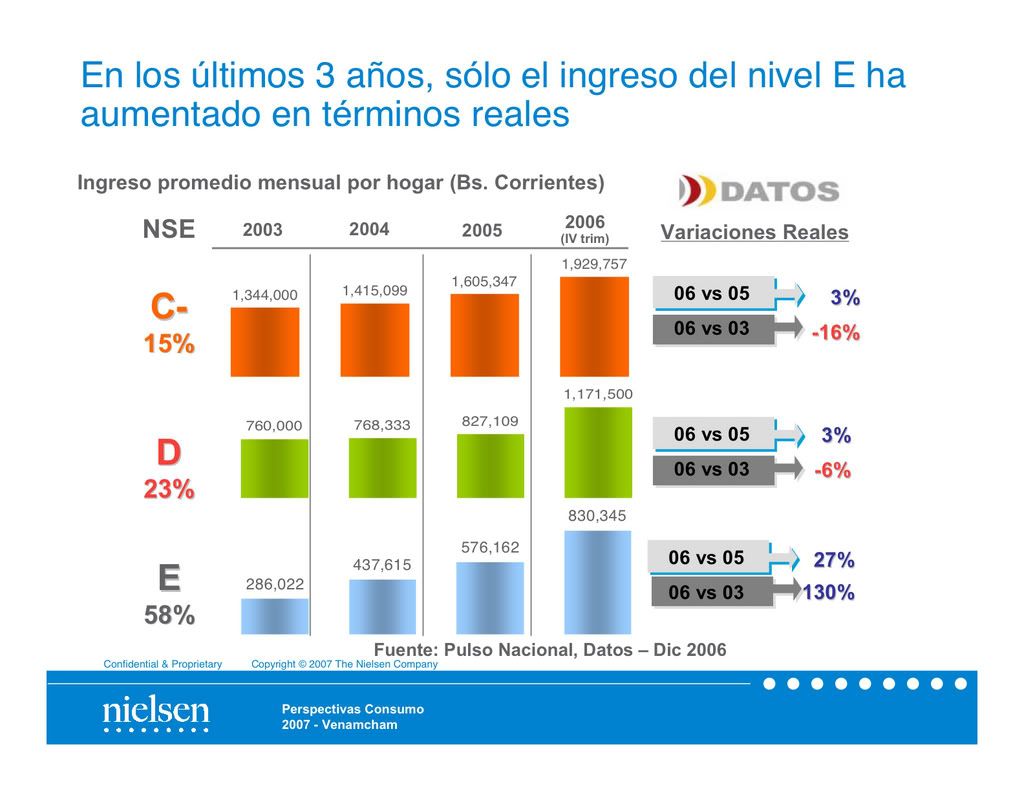
What lies behind the shrill anti- Chávez hysteria (much of it financed by the US government) isn't a crumbling economy or state repression, but the exclusion of the former ruling class and their allies in Washington from the levers of state power. While Venezuela retains many of the features of the pre-revolutionary era, including bureaucracy and corruption, independent surveys show that incomes for the working class and poor majority have risen by a staggering 130% in real terms.
But the changes in people's lives involve more than just improvements in material living standards. While on a visit to the town of Naiguata on the Caribbean coast, I happened upon one of the 2,000 new clinics which are providing top-quality healthcare to Venezuela's poor majority. Inside, I spoke to Antonio Brito, a 25-year-old Venezuelan doctor who had recently graduated from the Latin American School of Medicine in Cuba. Doctor Brito told me that of the 94 students in his class, over one-third were from indigenous communities. Those who graduated with him are now serving in their tribal villages. I asked Brito how much a foreigner like me would be charged for treatment. "Here, medical treatment is completely free for everybody," he replied. "The only qualification is that you are a human being."
In the mountains of the 23 de Enero barrio in Caracas, I saw more examples of the transformation that is taking place in Venezuela. In one part of the barrio, I saw newly installed gas pipes running up the side of each house. Residents are also being connected to the outside world. In the La Cañada district, I visited a brand new infocentre, which provides computer training and unlimited broadband internet access on 74 terminals, free of charge. One of the facilitators explained that the infocentre is the result of a partnership between the ministry of science and technology and the local community. The ministry provided the building materials, logistical support and computers, and the community built the centre and chose the staff. Five hundred similar infocentres have been opened in the barrios.
Of course, Venezuela's socialist revolution is not occurring in a geopolitical vacuum. The re-emergence of multi-polarity, specifically the rise of China and the resurgence of Russia, has created economic and political possibilities for third world countries that previously would have been unthinkable. A host of Latin American states, among them Bolivia, Ecuador and Nicaragua, have decisively rejected neo-liberal orthodoxy and US hegemony, and are co-operating through Alba and other mutual trade and investment arrangements. In South Africa, the clean sweep for the left in the elections to the leadership of the country's governing ANC, was in part inspired by the changes taking place in Latin America.
A popular slogan painted on walls across Latin America is Un Mundo Mejor es Necesario; in English - a better world is necessary. For the first time in a generation, a better world is also becoming possible.
"Despite the rightwing press campaign against him, Chavez is still popular in Venezuela, since his tenure has made a difference"
The drive from Simon Bolivar airport to the centre of Caracas retains the capacity to shock even the most hardened of travellers. It is not that poverty in oil-rich Venezuela is particularly acute by Latin American standards. I have seen much worse in Peru; mothers with dull eyes for whom a book is no more than an unintelligible mass of paper and ink, and children who grab at your trouser legs and, in return for a few coins, agree to cease whining: "Meester, please, me hungry"; the transaction robbing both the hunter and his prey of their humanity. In Venezuela, the shock is less to do with absolute poverty, and more to do with the way that social contrasts are expressed through geography, and in particular, altitude.
Hugo Chávez, the country's socialist president, is often blamed for the political polarisation of Venezuelan society. But the fact that the basis of that divide - the polarisation of wealth and power - long preceded Chávez, is proved by the urban landscape.
Suppose it were you in the passenger seat on your way into Caracas. Along the route you would doubtless look out of the window to your right. Were you to do so, you would see rows of ostentatious high-rise apartment blocks with polished windows, some of them with neatly manicured jungles protruding out of each balcony like a series of elaborate Chelsea flower shows rising into the sky. These are the homes of the middle classes. Then, if you turned your head and looked up the mountainside to your left, you would be confronted with reality as experienced by most Venezuelans: the barrio.
It is impossible to describe the architecture of a Caracas barrio by reference to a poor neighbourhood in London, Paris or New York. Seen from a distance, it is as if God had taken a giant wheelbarrow, filled with hundreds of thousands of tiny, half-made cubes and then proceeded to pour the contents indiscriminately over the mountainsides. As the cubes land, they come to rest in no particular order; one perched precariously atop another, all of them somehow defying the force of gravity.
But of course, the barrios were constructed by people: poor people from the countryside who migrated to the city during the course of the 20th century. When they arrived, finding no homes or land at prices they could afford, they squatted on unused land on the sides of the mountains, and began to surround the city with their own makeshift dwellings, built with whatever materials they could lay their hands on: usually a combination of brick, breeze block and tin, or for the less fortunate, cardboard.
The view from my friend's balcony on the 24th floor of a tower block, situated in the middle-class district of Los Dos Caminos, is spectacular. It is as if I am surveying the city from atop a lighthouse that has been plonked in the centre of a giant misshapen bowl. In the centre, there are streets arranged in straight lines, modern blocks of flats, gleaming shopping malls, and the ever-present traffic jams. Wrapped around the sides of the bowl are the barrios. Three or four kilometres from my vantage point is the Petare barrio, one of the largest in Latin America and home to almost half a million Venezuelans. At night, Petare rises in glittering yellow and white dots like the lights of a thousand Christmas trees. Soon the barrio will sparkle in monochrome, as the government programme of replacing the old yellow bulbs with energy-saving white ones nears completion.
The landscape provides a physical dimension to the sense that Caracas is a city under siege from itself: the better-off, literally, looking up at the poor who look down on the richer citizens. Politically also, Venezuelan society, in the throes of its 21st century socialist revolution, has some features of the siege warfare of previous eras. Those who were formerly socially excluded now have political power; although the wealthy retain much of the economic and ideological power, through their ownership of the private media and other businesses.
Despite Chávez having won 10 elections and referendums (and immediately accepting defeat in the one he lost), the disinformation war against Venezuelan democracy continues unabated. Two weeks ago, one of the presenters on Globovision told his viewers, apparently with a straight face, that a bank robbery in Altagracia de Orituco was the fault of Chávez. Later I watched a talk show where three upper-class pundits announced, again with no detectable trace of irony, that they were planning to march against "hunger and poverty". Incredibly, they meant their hunger and their poverty.
A few days earlier, I had been shopping in a typical Caracas supermarket in an upmarket part of town. The selection of foodstuffs, fresh, frozen and tinned, stacked high on every shelf, was as impressive as anything offered by Tesco or Wal-Mart. The only product we could not find was milk, which is being hoarded and illegally exported to Colombia by producers and distributors in an attempt to bust government price controls on basic foodstuffs. And despite the sporadic shortages, Venezuelans of all social classes are consuming more food than ever before. In the barrios, state-owned Mercal supermarkets sell food at around half the market price.
On another occasion, I stopped for a cafe negro at one of the multi-purpose street kiosks that are dotted all around Caracas. The usual selection of anti-government newspapers were on display: El Nacional, El Universal, El Mundo, El Nuevo Pais, as well as one or two more moderate organs. Most of them led with an anti-Chávez story, but the headline that grabbed my attention was the one from Tal Cual, a supposedly liberal paper: "Another dictatorship? Never!" it screamed. Last year one of their front page headlines was "Heil Hugo". Underneath was a photomontage of Chavez in a Hitler moustache. Despite these provocations, neither Tal Cual nor any of the more extreme rightwing papers has ever been subject to any censorship by the Chávez administration. Polls show that the percentage of Venezuelans who are "satisfied with their democracy works", has risen from 35% to 59% during the Chávez presidency. The Latin American average is 37%.
In December, Chávez suffered his first ever electoral defeat. Constitutional changes that would have enshrined participatory democracy and removed the limit on the number of terms a president could serve, were rejected by the narrowest of margins in a nationwide referendum. While the opposition vote remained unchanged at four and a half million, over one third of government supporters opted to stay at home. Many reasons have been advanced to explain this mass abstention, including the milk shortages; high crime rates and corruption; the complexity of the proposals; bureaucratic inefficiency; a poor campaign and complacency.
Undoubtedly, private media propaganda also played its part in confusing supporters of the revolution and shoring up support for the opposition. One man I spoke to told me that his mother-in-law, a hitherto loyal Chávez voter, had abstained, fearing that if the amendments were passed, the government would nationalise her apartment. I checked the voting records for the middle-class area where I was staying. Some 87% of my neighbours had voted against the proposals. However, it would be foolish for the opposition to draw too much comfort from their referendum victory. Chávez remains overwhelmingly popular in the barrios and provided that the government is able to refocus its efforts on delivery, those of his supporters who abstained will turn out in future elections.
What lies behind the shrill anti- Chávez hysteria (much of it financed by the US government) isn't a crumbling economy or state repression, but the exclusion of the former ruling class and their allies in Washington from the levers of state power. While Venezuela retains many of the features of the pre-revolutionary era, including bureaucracy and corruption, independent surveys show that incomes for the working class and poor majority have risen by a staggering 130% in real terms.
But the changes in people's lives involve more than just improvements in material living standards. While on a visit to the town of Naiguata on the Caribbean coast, I happened upon one of the 2,000 new clinics which are providing top-quality healthcare to Venezuela's poor majority. Inside, I spoke to Antonio Brito, a 25-year-old Venezuelan doctor who had recently graduated from the Latin American School of Medicine in Cuba. Doctor Brito told me that of the 94 students in his class, over one-third were from indigenous communities. Those who graduated with him are now serving in their tribal villages. I asked Brito how much a foreigner like me would be charged for treatment. "Here, medical treatment is completely free for everybody," he replied. "The only qualification is that you are a human being."
In the mountains of the 23 de Enero barrio in Caracas, I saw more examples of the transformation that is taking place in Venezuela. In one part of the barrio, I saw newly installed gas pipes running up the side of each house. Residents are also being connected to the outside world. In the La Cañada district, I visited a brand new infocentre, which provides computer training and unlimited broadband internet access on 74 terminals, free of charge. One of the facilitators explained that the infocentre is the result of a partnership between the ministry of science and technology and the local community. The ministry provided the building materials, logistical support and computers, and the community built the centre and chose the staff. Five hundred similar infocentres have been opened in the barrios.
Of course, Venezuela's socialist revolution is not occurring in a geopolitical vacuum. The re-emergence of multi-polarity, specifically the rise of China and the resurgence of Russia, has created economic and political possibilities for third world countries that previously would have been unthinkable. A host of Latin American states, among them Bolivia, Ecuador and Nicaragua, have decisively rejected neo-liberal orthodoxy and US hegemony, and are co-operating through Alba and other mutual trade and investment arrangements. In South Africa, the clean sweep for the left in the elections to the leadership of the country's governing ANC, was in part inspired by the changes taking place in Latin America.
A popular slogan painted on walls across Latin America is Un Mundo Mejor es Necesario; in English - a better world is necessary. For the first time in a generation, a better world is also becoming possible.
¿Por qué los barrios todavía aman a Chávez?
¿Por qué los barrios todavía aman a Chávez? por Calvin Tucker.
http://aporrea.org/actualidad/a51461.html
"A pesar de la campaña emprendida por la prensa derechista contra Chávez,
todavía es popular en Venezuela, pues su permanencia en el poder
ha marcado la diferencia"
El trayecto del aeropuerto Simón Bolívar al centro de Caracas sorprende hasta al más fuerte de los viajeros. No es que la pobreza en la Venezuela rica en petróleo mantiene niveles alarmantes de acuerdo a los niveles latinoamericanos. He visto casos peores en Perú; las madres con ojos apagados, para quienes un libro no es más que una masa inteligible de papel y tinta, y niños que jalan los pantalones, para obtener a cambio unas monedas, lloriqueando: "Señor, por favor, estoy hambriento". En Venezuela, el choque no tiene nada que ver con la pobreza absoluta sino más bien con la manera como se aprecian los contrastes sociales a lo largo de la geografía, y en particular, en la altitud.
Hugo Chávez, el presidente socialista del país, a menudo es culpado por la polarización política de la sociedad venezolana. Pero el hecho es que la base de esta división - la polarización de riqueza y poder – que se vivió mucho ante de Chávez, se muestra a través del paisaje urbano.
Suponga que usted va pasajero camino a Caracas. A lo largo del camino, indudablemente miraría por de la ventana a su derecha, por donde vería muchos edificios altos y ostentosos con ventanas pulidas, algunos de ellos con jardines bien cuidados, que sobresalen de cada balcón como si fuera una exposición de flores que se elevan en el cielo. Éstas son las casas de la clase media. Luego, si usted voltea y mira a su izquierda, se enfrentaría con la realidad que experimenta la mayor parte de los venezolanos: el barrio.
Es imposible describir la arquitectura de un barrio en Caracas si se toma como referencia a una vecindad pobre en Londres, París o Nueva York. Viéndolo desde lejos, es como si Dios hubiera tomado una carretilla gigantesca llena con cientos de miles de cubos diminutos, hechos a media y luego se puso a verter los contenidos indiscriminadamente sobre las montañas. Como los cubos ruedan, se paran sin orden alguno y uno queda encima del otro, todos desafiando de alguna manera la fuerza de la gravedad.
Pero por supuesto, los barrios fueron construidos por el pueblo: la gente pobre del campo que emigró a la ciudad durante el Siglo XX. Cuando llegaron, al no encontrar casas o tierras a precios accesibles, ocuparon tierras ociosas en los cerros y comenzaron a rodear la ciudad con sus ranchos, construidos con cualquier material de que disponían: por lo general una combinación de ladrillo, bloque y lata, o, en el peor de los casos, cartón.
La vista del balcón de mi amigo en el piso 24 de un edificio, situado en un municipio de clase media en Los Dos Caminos, es espectacular. Es como si contemplara la ciudad desde lo alto de un faro que ha sido colocado en el centro de una inmensa edificación. Hay calles organizadas, edificios modernos, centros comerciales relucientes, y el constante embotellamiento. Alrededor de los edificios se encuentran los barrios. A tres o cuatro kilómetros de donde me encontraba se encuentra el barrio Petare, uno de los más grandes en América Latina que alberga casi medio millón de venezolanos. Por la noche, Petare reluce con luces amarillas y blancas que brillan como las luces de miles de árboles de navidad.
Pronto el barrio brillará con luz blanca, solo habrá que esperar que el programa del Gobierno de sustituir los viejos bombillos amarillos por blancos que ahorran energía se culmine.
El paisaje ofrece una dimensión física que hace pensar que Caracas está ubicada sobre sí misma: mejor dicho, literalmente, la gente pobre que vive en lo alto observa a los ricos que habitan en la parte baja. En lo que respecta lo político, la sociedad venezolana, en el medio de su revolución socialista del Siglo XXI tiene algunos rasgos de guerra de épocas anteriores. Aquellos que fueron socialmente excluidos anteriormente, ahora tienen poder político; aunque los ricos se queden con la mayor parte del poder económico e ideológico dado que son dueños de medios privados y otros negocios.
A pesar de que Chávez ha ganado 10 elecciones y referendos (inmediatamente aceptó la derrota en el referéndum que perdió), la guerra de la desinformación contra la democracia venezolana sigue incrementándose. Hace dos semanas, uno de los presentadores de Globovisión dijo a sus espectadores, muy seriamente que un robo bancario en Altagracia de Orituco era culpa de Chávez. Luego, vi un programa de entrevistas donde tres expertos de clase alta anunciaron, sin mostrar rasgos de ironía, que ellos estaban planeando una marcha contra el "hambre y la pobreza". Increíblemente, ellos se refirieron a su hambre y a su pobreza.
Unos días antes, yo había estado haciendo compras en un frecuentado supermercado de Caracas, ubicado en una zona de clase alta del la ciudad. La selección de productos alimenticios, frescos, congelados y enlatados, apilados en los anaqueles, era tan impresionante como los que se aprecian en Tesco o Wal-Mart (supermercados británicos). El único producto que no pudimos encontrar fue la leche, que está siendo acaparada e ilegalmente exportada a Colombia por productores y distribuidores en un intento por violar los controles de precios establecidos por el Gobierno sobre productos alimenticios básicos. Y a pesar de la esporádica escasez, los venezolanos de todas las clases sociales consumen más alimento que nunca antes. En los barrios, los supermercados nacionales Mercal venden alimentos a la mitad del precio del mercado.
En otra ocasión, me paré para comprar un café negro en uno de los kioscos multiusos que están ubicados alrededor de Caracas. La selección habitual de periódicos en contra del gobierno estaban expuestos: El Nacional, El Mundo, El Universal, el Nuevo País, así como uno o dos más moderados. La mayor parte de ellos con una historia anti-Chávez, pero el titular que más atrajo mi atención fue el de Tal Cual, un periódico supuestamente liberal: “¿Otra dictadura? ¡Nunca!". El año pasado uno de sus titulares en la primera página fue "Heil Hugo". En la parte inferior se encontraba un fotomontaje de Chávez con un bigote de Hitler. A pesar de estas provocaciones, ni Tal Cual ni ninguno de los rotativos derechistas más extremos ha estado sujeto alguna vez a alguna censura por parte del gobierno de Chávez. Las encuestas muestran que el porcentaje de venezolanos que están "satisfechos por sus trabajos democráticos", se ha elevado del 35 % al 59 % durante la presidencia Chávez. El promedio latinoamericano es del 37 %.
En diciembre, Chávez sufrió su primer fracaso electoral. Los cambios constitucionales que habrían consagrado la democracia participativa y eliminado el límite de períodos de un presidente, fueron rechazados por los más estrechos márgenes en un referéndum de escala nacional. Mientras que el voto de la oposición permaneció sin alteración en cuatro millones y medio, más de una tercera parte de partidarios del gobierno optó por quedarse en casa. Se han expuesto múltiples razones para explicar esta abstención masiva: la escasez de leche; los altos índices de delincuencia y corrupción; la complejidad de las propuestas; la ineficiencia burocrática; una pobre campaña y complacencia.
Indudablemente, la propaganda de los medios privados también jugó su parte para confundir a los partidarios de la revolución y reforzar el apoyo a la oposición. Un hombre con quien hablé me dijo que su suegra, una fiel votante chavista, se había abstenido, temiendo que si las enmiendas eran aprobadas, el Gobierno se apropiaría de su apartamento. Rrevisé los archivos del voto para el área de la clase media donde yo me estaba alojando y aproximadamente el 87 % de mis vecinos había votado contra la propuesta. Sin embargo, sería absurdo si la oposición proyectara demasiada comodidad ante su victoria en el referéndum. Chávez sigue siendo popular de manera aplastante y el Gobierno es capaz de reenfocar sus esfuerzos sobre la base de que aquellas personas que se abstuvieron saldrán a votar en futuras elecciones.
Lo que realmente se esconde detrás de la estridente histeria anti-Chávez (la mayor parte de ella financiada por el gobierno estadounidense) no es una economía decadente o una represión estatal, sino la exclusión de la antigua clase dominante y sus aliados en Washington de grupos de poder estatal. Mientras Venezuela mantiene muchos de los rasgos de la época pre revolucionaria, incluyendo burocracia y corrupción, algunas encuestas independientes demuestran que los ingresos de la clase obrera y mayoría pobre se han elevado en un asombroso 130 % en términos reales.
Pero los cambios en la vida de la gente implican más que sólo mejoras en el nivel de vida material. Durante una visita que hice a la ciudad de Naiguatá en la costa del Caribe, me encontré con una de las 2.000 nuevas clínicas que proporcionan asistencia médica de alta calidad a la los pobres de Venezuela. Conversé con Antonio Brito, un doctor venezolano de 25 años que se había graduado recientemente de la Escuela Latinoamericana de Medicina en Cuba. El doctor Brito me dijo que la tercera parte de los 94 estudiantes en su clase, venían de comunidades indígenas. Aquellos que se graduaron con él, sirven ahora en sus comunidades indígenas. Pregunté a Brito cuánto costaría el tratamiento a un extranjero como yo. "Aquí, el tratamiento médico es completamente gratis," contestó. "El único requisito es que usted sea un ser humano."
En el barrio 23 de Enero de Caracas conocí más ejemplos de la transformación que vive Venezuela. En una parte del barrio, noté tuberías de gas recién instalados que sobresalían por los lados de cada casa. Los habitantes también están conectados con el mundo exterior. En el sector la Cañada, visité un infocentro que proporciona formación gratuita en el área de computación y el acceso a Internet banda ancha ilimitado en 74 terminales. Uno de los facilitadores explicó que el infocentro es el resultado de un trabajo mancomunado entre el Ministerio de Ciencia y Tecnología y la comunidad local. El Ministerio proporcionó los materiales de construcción, el apoyo logístico y las computadoras, y la comunidad construyó el centro y eligió el personal. Quinientos infocentros similares se han abierto en los barrios
Por supuesto, la revolución socialista de Venezuela no ocurre en un vacío geopolítico. La reaparición de la multipolaridad, específicamente el resurgimiento de China y de Rusia, ha creado posibilidades económicas y políticas para países del tercer mundo que antes habrían sido impensables. Varios países latinoamericanos, entre ellos Bolivia, Ecuador y Nicaragua, han decididamente rechazado la ortodoxia neo-liberal y la hegemonía estadounidense, y están cooperando a través del ALBA, otros comercios mutuos e inversiones. En Sudáfrica, la victoria absoluta de la izquierda en las elecciones a la ANC (Congreso Nacional Africano), fue en parte inspirada por los cambios que ocurren en América Latina.
Un lema popular pintado en paredes en América Latina refleja “Un Mundo Mejor es Necesario”. Por primera vez en una generación, un mundo mejor también es posible.
/ The Guardian / 17 de febrero de 2008
http://aporrea.org/actualidad/a51461.html
"A pesar de la campaña emprendida por la prensa derechista contra Chávez,
todavía es popular en Venezuela, pues su permanencia en el poder
ha marcado la diferencia"
El trayecto del aeropuerto Simón Bolívar al centro de Caracas sorprende hasta al más fuerte de los viajeros. No es que la pobreza en la Venezuela rica en petróleo mantiene niveles alarmantes de acuerdo a los niveles latinoamericanos. He visto casos peores en Perú; las madres con ojos apagados, para quienes un libro no es más que una masa inteligible de papel y tinta, y niños que jalan los pantalones, para obtener a cambio unas monedas, lloriqueando: "Señor, por favor, estoy hambriento". En Venezuela, el choque no tiene nada que ver con la pobreza absoluta sino más bien con la manera como se aprecian los contrastes sociales a lo largo de la geografía, y en particular, en la altitud.
Hugo Chávez, el presidente socialista del país, a menudo es culpado por la polarización política de la sociedad venezolana. Pero el hecho es que la base de esta división - la polarización de riqueza y poder – que se vivió mucho ante de Chávez, se muestra a través del paisaje urbano.
Suponga que usted va pasajero camino a Caracas. A lo largo del camino, indudablemente miraría por de la ventana a su derecha, por donde vería muchos edificios altos y ostentosos con ventanas pulidas, algunos de ellos con jardines bien cuidados, que sobresalen de cada balcón como si fuera una exposición de flores que se elevan en el cielo. Éstas son las casas de la clase media. Luego, si usted voltea y mira a su izquierda, se enfrentaría con la realidad que experimenta la mayor parte de los venezolanos: el barrio.
Es imposible describir la arquitectura de un barrio en Caracas si se toma como referencia a una vecindad pobre en Londres, París o Nueva York. Viéndolo desde lejos, es como si Dios hubiera tomado una carretilla gigantesca llena con cientos de miles de cubos diminutos, hechos a media y luego se puso a verter los contenidos indiscriminadamente sobre las montañas. Como los cubos ruedan, se paran sin orden alguno y uno queda encima del otro, todos desafiando de alguna manera la fuerza de la gravedad.
Pero por supuesto, los barrios fueron construidos por el pueblo: la gente pobre del campo que emigró a la ciudad durante el Siglo XX. Cuando llegaron, al no encontrar casas o tierras a precios accesibles, ocuparon tierras ociosas en los cerros y comenzaron a rodear la ciudad con sus ranchos, construidos con cualquier material de que disponían: por lo general una combinación de ladrillo, bloque y lata, o, en el peor de los casos, cartón.
La vista del balcón de mi amigo en el piso 24 de un edificio, situado en un municipio de clase media en Los Dos Caminos, es espectacular. Es como si contemplara la ciudad desde lo alto de un faro que ha sido colocado en el centro de una inmensa edificación. Hay calles organizadas, edificios modernos, centros comerciales relucientes, y el constante embotellamiento. Alrededor de los edificios se encuentran los barrios. A tres o cuatro kilómetros de donde me encontraba se encuentra el barrio Petare, uno de los más grandes en América Latina que alberga casi medio millón de venezolanos. Por la noche, Petare reluce con luces amarillas y blancas que brillan como las luces de miles de árboles de navidad.
Pronto el barrio brillará con luz blanca, solo habrá que esperar que el programa del Gobierno de sustituir los viejos bombillos amarillos por blancos que ahorran energía se culmine.
El paisaje ofrece una dimensión física que hace pensar que Caracas está ubicada sobre sí misma: mejor dicho, literalmente, la gente pobre que vive en lo alto observa a los ricos que habitan en la parte baja. En lo que respecta lo político, la sociedad venezolana, en el medio de su revolución socialista del Siglo XXI tiene algunos rasgos de guerra de épocas anteriores. Aquellos que fueron socialmente excluidos anteriormente, ahora tienen poder político; aunque los ricos se queden con la mayor parte del poder económico e ideológico dado que son dueños de medios privados y otros negocios.
A pesar de que Chávez ha ganado 10 elecciones y referendos (inmediatamente aceptó la derrota en el referéndum que perdió), la guerra de la desinformación contra la democracia venezolana sigue incrementándose. Hace dos semanas, uno de los presentadores de Globovisión dijo a sus espectadores, muy seriamente que un robo bancario en Altagracia de Orituco era culpa de Chávez. Luego, vi un programa de entrevistas donde tres expertos de clase alta anunciaron, sin mostrar rasgos de ironía, que ellos estaban planeando una marcha contra el "hambre y la pobreza". Increíblemente, ellos se refirieron a su hambre y a su pobreza.
Unos días antes, yo había estado haciendo compras en un frecuentado supermercado de Caracas, ubicado en una zona de clase alta del la ciudad. La selección de productos alimenticios, frescos, congelados y enlatados, apilados en los anaqueles, era tan impresionante como los que se aprecian en Tesco o Wal-Mart (supermercados británicos). El único producto que no pudimos encontrar fue la leche, que está siendo acaparada e ilegalmente exportada a Colombia por productores y distribuidores en un intento por violar los controles de precios establecidos por el Gobierno sobre productos alimenticios básicos. Y a pesar de la esporádica escasez, los venezolanos de todas las clases sociales consumen más alimento que nunca antes. En los barrios, los supermercados nacionales Mercal venden alimentos a la mitad del precio del mercado.
En otra ocasión, me paré para comprar un café negro en uno de los kioscos multiusos que están ubicados alrededor de Caracas. La selección habitual de periódicos en contra del gobierno estaban expuestos: El Nacional, El Mundo, El Universal, el Nuevo País, así como uno o dos más moderados. La mayor parte de ellos con una historia anti-Chávez, pero el titular que más atrajo mi atención fue el de Tal Cual, un periódico supuestamente liberal: “¿Otra dictadura? ¡Nunca!". El año pasado uno de sus titulares en la primera página fue "Heil Hugo". En la parte inferior se encontraba un fotomontaje de Chávez con un bigote de Hitler. A pesar de estas provocaciones, ni Tal Cual ni ninguno de los rotativos derechistas más extremos ha estado sujeto alguna vez a alguna censura por parte del gobierno de Chávez. Las encuestas muestran que el porcentaje de venezolanos que están "satisfechos por sus trabajos democráticos", se ha elevado del 35 % al 59 % durante la presidencia Chávez. El promedio latinoamericano es del 37 %.
En diciembre, Chávez sufrió su primer fracaso electoral. Los cambios constitucionales que habrían consagrado la democracia participativa y eliminado el límite de períodos de un presidente, fueron rechazados por los más estrechos márgenes en un referéndum de escala nacional. Mientras que el voto de la oposición permaneció sin alteración en cuatro millones y medio, más de una tercera parte de partidarios del gobierno optó por quedarse en casa. Se han expuesto múltiples razones para explicar esta abstención masiva: la escasez de leche; los altos índices de delincuencia y corrupción; la complejidad de las propuestas; la ineficiencia burocrática; una pobre campaña y complacencia.
Indudablemente, la propaganda de los medios privados también jugó su parte para confundir a los partidarios de la revolución y reforzar el apoyo a la oposición. Un hombre con quien hablé me dijo que su suegra, una fiel votante chavista, se había abstenido, temiendo que si las enmiendas eran aprobadas, el Gobierno se apropiaría de su apartamento. Rrevisé los archivos del voto para el área de la clase media donde yo me estaba alojando y aproximadamente el 87 % de mis vecinos había votado contra la propuesta. Sin embargo, sería absurdo si la oposición proyectara demasiada comodidad ante su victoria en el referéndum. Chávez sigue siendo popular de manera aplastante y el Gobierno es capaz de reenfocar sus esfuerzos sobre la base de que aquellas personas que se abstuvieron saldrán a votar en futuras elecciones.
Lo que realmente se esconde detrás de la estridente histeria anti-Chávez (la mayor parte de ella financiada por el gobierno estadounidense) no es una economía decadente o una represión estatal, sino la exclusión de la antigua clase dominante y sus aliados en Washington de grupos de poder estatal. Mientras Venezuela mantiene muchos de los rasgos de la época pre revolucionaria, incluyendo burocracia y corrupción, algunas encuestas independientes demuestran que los ingresos de la clase obrera y mayoría pobre se han elevado en un asombroso 130 % en términos reales.
Pero los cambios en la vida de la gente implican más que sólo mejoras en el nivel de vida material. Durante una visita que hice a la ciudad de Naiguatá en la costa del Caribe, me encontré con una de las 2.000 nuevas clínicas que proporcionan asistencia médica de alta calidad a la los pobres de Venezuela. Conversé con Antonio Brito, un doctor venezolano de 25 años que se había graduado recientemente de la Escuela Latinoamericana de Medicina en Cuba. El doctor Brito me dijo que la tercera parte de los 94 estudiantes en su clase, venían de comunidades indígenas. Aquellos que se graduaron con él, sirven ahora en sus comunidades indígenas. Pregunté a Brito cuánto costaría el tratamiento a un extranjero como yo. "Aquí, el tratamiento médico es completamente gratis," contestó. "El único requisito es que usted sea un ser humano."
En el barrio 23 de Enero de Caracas conocí más ejemplos de la transformación que vive Venezuela. En una parte del barrio, noté tuberías de gas recién instalados que sobresalían por los lados de cada casa. Los habitantes también están conectados con el mundo exterior. En el sector la Cañada, visité un infocentro que proporciona formación gratuita en el área de computación y el acceso a Internet banda ancha ilimitado en 74 terminales. Uno de los facilitadores explicó que el infocentro es el resultado de un trabajo mancomunado entre el Ministerio de Ciencia y Tecnología y la comunidad local. El Ministerio proporcionó los materiales de construcción, el apoyo logístico y las computadoras, y la comunidad construyó el centro y eligió el personal. Quinientos infocentros similares se han abierto en los barrios
Por supuesto, la revolución socialista de Venezuela no ocurre en un vacío geopolítico. La reaparición de la multipolaridad, específicamente el resurgimiento de China y de Rusia, ha creado posibilidades económicas y políticas para países del tercer mundo que antes habrían sido impensables. Varios países latinoamericanos, entre ellos Bolivia, Ecuador y Nicaragua, han decididamente rechazado la ortodoxia neo-liberal y la hegemonía estadounidense, y están cooperando a través del ALBA, otros comercios mutuos e inversiones. En Sudáfrica, la victoria absoluta de la izquierda en las elecciones a la ANC (Congreso Nacional Africano), fue en parte inspirada por los cambios que ocurren en América Latina.
Un lema popular pintado en paredes en América Latina refleja “Un Mundo Mejor es Necesario”. Por primera vez en una generación, un mundo mejor también es posible.
/ The Guardian / 17 de febrero de 2008
miércoles, 6 de febrero de 2008
John Carlin's defecation, Toni Solo's response.
Carlin's garbage about Venezuela's Chavez:
http://observer.guardian.co.uk/world/story/0,,2251440,00.html?gusrc=rss&feed=12
Revealed: Chávez role in cocaine trail to EuropeThe guerrilla group Farc has long been suspected of running the Colombian cocaine industry. But how does it move the drug so readily out of the country? In a special investigation, John Carlin in Venezuela reports on the remarkable collusion between Colombia's rebels and its neighbour's armed forces Sunday February 3, 2008The Observer
Some fighters desert from the Revolutionary Armed Forces of Colombia (Farc) because they feel betrayed by the leadership, demoralised by a sense that the socialist ideals that first informed the guerrilla group have been replaced by the savage capitalism of drug trafficking. Others leave to be with their families. Still others leave because they begin to think that, if they do not, they will die. Such is the case of Rafael, who deserted last September after 18 months operating in a Farc base inside Venezuela, with which Colombia shares a long border.
The logic of Rafael's decision seems, at first, perverse. He is back in Colombia today where, as a guerrilla deserter, he will live for the rest of his days under permanent threat of assassination by his former comrades. Venezuela, on the other hand, ought to have been a safe place to be a Farc guerrilla. President Hugo Chávez has publicly given Farc his political support and the Colombian army seems unlikely to succumb to the temptation to cross the border in violation of international law.
'All this is true,' says Rafael. 'The Colombian army doesn't cross the border and the guerrillas have a non-aggression pact with the Venezuelan military. The Venezuelan government lets Farc operate freely because they share the same left-wing, Bolivarian ideals, and because Farc bribes their people.'
Then what did he run away from? 'From a greater risk than the one I run now: from the daily battles with other guerrilla groups to see who controls the cocaine-trafficking routes. There is a lot of money at stake in control of the border where the drugs come in from Colombia. The safest route to transport cocaine to Europe is via Venezuela.'
Rafael is one of 2,400 guerrillas who deserted Farc last year. He is one of four I spoke to, all of whom had grown despondent about a purportedly left-wing revolutionary movement whose power and influence rests less on its political legitimacy and more on the benefits of having become the world's biggest kidnapping organisation and the world's leading traffickers in cocaine.
Farc has come a long way from its leftist revolutionary roots and is now commonly referred to in Colombia and elsewhere as 'narco-guerrillas'. Pushed out to the border areas, it has been rendered increasingly irrelevant politically and militarily due to the combined efforts of Colombia's centre-right President, Alvaro Uribe, and his principal backers, the United States, whose Plan Colombia, devised under the presidency of Bill Clinton, has pumped hundreds of millions of dollars into the Colombian military and police. A large part of Plan Colombia is designed to eradicate the vast coca plantations cultivated and maintained by Farc and other Colombian groups.
However, the impact on Farc has been ambiguous: its chances of launching a left-wing insurrection in the manner of Nicaragua's Sandinistas in 1979 are nil, but then they probably always were; yet it looks capable of surviving indefinitely as an armed force as a result of the income from its kidnapping, extortion and cocaine interests.
Helping it to survive, and prosper, is its friend and neighbour Hugo Chávez. The Venezuelan President sought to extract some international credit from the role he played as mediator in the release last month in Venezuelan territory of two kidnapped women, friends of Ingrid Betancourt, a French citizen and former Colombian presidential candidate held by Farc for six years. But Chávez has not denounced Farc for holding Betancourt and 43 other 'political' hostages.
I spoke at length to Rafael (not his real name) and three other Farc deserters about the links between the guerrilla group and Chávez's Venezuela, in particular their co-operation in the drug business. All four have handed themselves in to the Colombian government in recent months under an official programme to help former guerrillas adapt back to civilian life.
I also spoke to high-level security, intelligence and diplomatic sources from five countries, some of them face to face in Colombia and London, some of them by phone. All of them insisted on speaking off the record, either for political or safety reasons, both of which converge in Farc, the oldest functioning guerrilla organisation in the world and one that is richer, more numerous and better armed than any other single Colombian drug cartel and is classified as 'terrorist' by the European Union and the US.
All the sources I reached agreed that powerful elements within the Venezuelan state apparatus have forged a strong working relationship with Farc. They told me that Farc and Venezuelan state officials operated actively together on the ground, where military and drug-trafficking activities coincide. But the relationship becomes more passive, they said, less actively involved, the higher up the Venezuelan government you go. No source I spoke to accused Chávez himself of having a direct role in Colombia's giant drug-trafficking business. Yet the same people I interviewed struggled to believe that Chávez was not aware of the collusion between his armed forces and the leadership of Farc, as they also found it difficult to imagine that he has no knowledge of the degree to which Farc is involved in the cocaine trade.
I made various attempts to extract an official response to these allegations from the Venezuelan government. In the end Foreign Minister Nicolás Maduro made a public pronouncement in Uruguay in which he said, without addressing the substance of the allegations, that they were part of a 'racist' and 'colonialist' campaign against Venezuela by the centre-left Spanish newspaper El País, where I originally wrote about Farc and the Venezuelan connection.
What no one disputes, however, is that Chávez is a political ally of Farc (last month he called on the EU and US to stop labelling its members 'terrorists') or that for many years Farc has used Venezuelan territory as a refuge. A less uncontroversial claim, made by all the sources to whom I spoke (the four disaffected guerrillas included), is that if it were not for cocaine, the fuel that feeds the Colombian war, Farc would long ago have disbanded.
The varied testimonies I have heard reveal that the co-operation between Venezuela and the guerrillas in transporting cocaine by land, air and sea is both extensive and systematic. Venezuela is also supplying arms to the guerrillas, offering them the protection of their armed forces in the field, and providing them with legal immunity de facto as they go about their giant illegal business.
Thirty per cent of the 600 tons of cocaine smuggled from Colombia each year goes through Venezuela. Most of that 30 per cent ends up in Europe, with Spain and Portugal being the principal ports of entry. The drug's value on European streets is some £7.5bn a year.
The infrastructure that Venezuela provides for the cocaine business has expanded dramatically over the past five years of Chávez's presidency, according to intelligence sources. Chávez's decision to expel the US Drug Enforcement Administration from his country in 2005 was celebrated both by Farc and drug lords in the conventional cartels with whom they sometimes work. According to Luis Hernando Gómez Bustamante, a Colombian kingpin caught by the police last February, 'Venezuela is the temple of drug trafficking.'
A European diplomat with many years of experience in Latin America echoed this view. 'The so-called anti-imperialist, socialist and Bolivarian nation that Chávez says he wants to create is en route to becoming a narco-state in the same way that Farc members have turned themselves into narco-guerrillas. Perhaps Chávez does not realise it but, unchecked, this phenomenon will corrode Venezuela like a cancer.'
The deserters I interviewed said that not only did the Venezuelan authorities provide armed protection to at least four permanent guerrilla camps inside their country, they turned a blind eye to bomb-making factories and bomber training programmes going on inside Farc camps. Rafael - tall and lithe, with the sculptured facial features of the classic Latin American 'guerrillero' - said he was trained in Venezuela to participate in a series of bomb attacks in Bogotá, Colombia's capital.
Co-operation between the Colombian guerrillas and the Venezuelan government extended, Rafael said, to the sale of arms by Chávez's military to Farc; to the supply of Venezuelan ID cards to regular guerrilla fighters and of Venezuelan passports to the guerrilla leaders so they were able to travel to Cuba and Europe; and also to a reciprocal understanding whereby Farc gave military training to the Bolivarian Forces of Liberation, a peculiar paramilitary group created by the Chávez government purportedly for the purpose of defending the motherland in case of American invasion.
Chávez's contacts with Farc are conducted via one of the members of the organisation's leadership, Iván Márquez, who also has a farm in Venezuela and who communicates with the President via senior officials of the Venezuelan intelligence service. As a Farc deserter who had filled a senior position in the propaganda department said: 'Farc shares three basic Bolivarian principles with Chávez: Latin American unity; the anti-imperialist struggle; and national sovereignty. These ideological positions lead them to converge on the tactical terrain.'
The tactical benefits of this Bolivarian (after the 19th-century Latin American liberator, Simón Bolívar) solidarity reach their maximum expression in the multinational cocaine industry. Different methods exist to transport the drug from Colombia to Europe, but what they all have in common is the participation, by omission or commission, of the Venezuelan authorities.
The most direct route is the aerial one. Small planes take off from remote jungle strips in Colombia and land in Venezuelan airfields. Then there are two options, according to intelligence sources. Either the same light planes continue on to Haiti or the Dominican Republic (the US government says that since 2006 its radar network has detected an increase from three to 15 in the number of 'suspicious flights' a week out of Venezuela); or the cocaine is loaded on to large planes that fly directly to countries in West Africa such as Guinea-Bissau or Ghana, from where it continues by sea to Portugal or the north-western Spanish province of Galicia, the entry points to the EU Schengen zone.
A less cumbersome traditional method for getting the drugs to Europe in small quantities is via passengers on international commercial flights - 'mules', as they call them in Colombia. One of the guerrilla deserters I spoke to, Marcelo, said he had taken part in 'eight or nine' missions of this type over 12 months. 'Operating inside Venezuela is the easiest thing in the world,' he said. 'Farc guerrillas are in there completely and the National Guard, the army and other Venezuelans in official positions offer them their services, in exchange for money. There are never shoot-outs between Farc and the guardia or army.'
Rafael said he took part in operations on a bigger scale, their final objective being to transport the cocaine by sea from Venezuelan ports on the Caribbean Sea. His rank in Farc was higher than Marcelo's and he had access to more confidential information. 'You receive the merchandise on the border, brought in by lorry,' he said. 'When the vehicle arrives the National Guard is waiting, already alerted to the fact that it was on its way. They have already been paid a bribe up front, so that the lorry can cross into Venezuela without problems.
'Sometimes they provide us with an escort for the next phase, which involves me and other comrades getting on to the lorry, or into a car that will drive along with it. We then make the 16-hour trip to Puerto Cabello, which is on the coast, west of Caracas. There the lorry is driven into a big warehouse controlled jointly by Venezuelan locals and by Farc, which is in charge of security. Members of the Venezuelan navy take care of customs matters and the safe departure of the vessels. They are alive to all that is going on and they facilitate everything Farc does.'
Rafael described a similar routine with drug operations involving the port of Maracaibo which, according to police sources, is 'a kind of paradise' for drug traffickers. Among whom - until last week when he was gunned down by a rival cartel in a Venezuelan town near the Colombian border - was one of the 'capos' most wanted internationally, a Colombian called Wilber Varela, but better known as 'Jabón', which means 'soap'. 'Varela and others like him set themselves up in stunning homes and buy bankrupt businesses and large tracts of land, converting themselves almost overnight into personages of great value to the local economy,' a police source said. 'Venezuela offers a perfect life insurance scheme for these criminals.'
This 'tactical' convergence between the Venezuelan armed forces and Farc extends to the military terrain. To the point that, according to one especially high-placed intelligence source I spoke to, the National Guard has control posts placed around the guerrilla camps. What for? 'To give them protection, which tells us that knowledge of the tight links between the soldiers on the ground and Farc reaches up to the highest decision-making levels of the Venezuelan military.'
Rafael told how he had travelled once by car with Captain Pedro Mendoza of the National Guard to a military base outside Caracas called Fuerte Tiuna. He entered with the captain, who handed him eight rifles. They then returned to the border with the rifles in the boot of the car.
Rafael said that members of the National Guard also supplied Farc with hand grenades, grenade-launchers and explosive material for bombs made out of a petrol-based substance called C-4.
An intelligence source confirmed that these small movements of arms occurred on a large scale. 'What we see is the drugs going from Colombia to Venezuela and the arms from Venezuela to Colombia. The arms move in a small but constant flow: 5,000 bullets, six rifles. It's very hard to detect because there are lots of small networks, very well co-ordinated, all of them by specialists in Farc.'
Rafael worked directly with these specialists, both in the arms and the drugs business, until he decided the time had come to change his life. 'In June and July I had received courses in making bombs alongside elements of Chávez's militias, the FBL. We learnt, there in a camp in Venezuela, how to put together different types of landmines and how to make bombs. They also taught us how to detonate bombs in a controlled fashion using mobile phones.'
They were training him, he said, for a mission in Bogotá. 'They gave us photos of our targets. We were going to work alongside two Farc groups based in the capital. The plan was to set off bombs, but as the date dawned I began to reflect that I could not continue this way. First, because of the danger from the military engagements we had with the ELN [another formerly left-wing guerrilla group] on the border over control of the drug routes and, second, because it now seemed to me there was a very real risk of getting caught and I believed I had already spent enough years in jail for the Farc cause. It was also highly possible that the security forces in Bogotá would kill me. That was why at the end of August I ran away and in September I handed myself in.'
A European diplomat who is well informed on the drug-trafficking business generally, and who is familiar with Rafael's allegations, made a comparison between the activities of Farc in Venezuela and hypothetically similar activities involving Eta in Spain.
'Imagine if Eta had a bomb-making school in Portugal inside camps protected by the Portuguese police, and that they planned to set off these bombs in Madrid; imagine that the Portuguese authorities furnished Eta with weapons in exchange for money obtained from the sales of drugs, in which the Portuguese authorities were also involved up to their necks: it would be a scandal of enormous proportions. Well, that, on a very big scale, is what the Venezuelan government is allowing to happen right now.'
'The truth,' one senior police source said, 'is that if Venezuela were to make a minimal effort to collaborate with the international community the difference it would make would be huge. We could easily capture two tons of cocaine a month more if they were just to turn up their police work one notch. They don't do it because the place is so corrupt but also, and this is the core reason, because of this "anti-imperialist" stand they take. "If this screws the imperialists," they think, "then how can we possibly help them?" The key to it all is a question of political will. And they don't have any.'
A similar logic applies, according to the highest-placed intelligence source I interviewed, regarding Farc's other speciality, kidnappings. 'If Hugo Chávez wanted it, he could force Farc to free Ingrid Betancourt tomorrow morning. He tells Farc: "You hand her over or it's game over in Venezuela for you." The dependence of Farc on the Venezuelans is so enormous that they could not afford to say no.'
A nation at war
· Colombia, the centre of the world's cocaine trade, has endured civil war for decades between left-wing rebels with roots in the peasant majority and right-wing paramilitaries with links to Spanish colonial landowners.
· Manuel 'Sureshot' Marulanda named his guerrilla band the Revolutionary Armed Forces of Colombia in 1966.
· Farc is thought to have about 800 hostages. The most high-profile is Ingrid Betancourt, 45, held since 2002.
· Every Farc member takes a vow to fight for 'social justice' in Colombia.
· About a third of Farc guerrillas are thought to be women.
· Venezuela's President Hugo Chávez is pushing for 'Bolivarian socialism', while Colombian President Alvaro Uribe is a free-market conservative.
Toni Solo's response:
Observer Exclusive: Hugo Chavez is President of Venezuela
(Source: http://fanonite.org/2008/02/03/observer-exclusive-hugo-chavez-is-venezuelan-president/)
February 3, 2008
Majority world opinion was not stunned on February 3rd when the UK Observer’s web site reported a fact about Venezuela. Perhaps it should have been. After extensive investigative research with my own insecure image in the mirror, I can reveal that this undiplomatic low-level unintelligent source commented, “well, chop me off at the knees and call me tripod….” Fact : Hugo Chavez is the Venezuelan President.
John Carlin’s anti-Chavez propaganda piece, datelined the February 3rd, really does contain just that single item of substance, buried deep inside yet another fact-impoverished Observer report on Venezuela. It is the only relevant substantive fact in the article. The rest of Carlin’s piece consists almost entirely of allegations plucked from thin air and quotations from Colombian government patsies or from unidentified “high-level security, intelligence and diplomatic sources”.
Carlin’s main allegations are that the Revolutionary Armed Forces of Colombia (FARC) depend heavily on Venezuelan support and that the Venezuelan civil and military authorities facilitate FARC narcotics dealing on a large scale as a matter of policy. He alleges, “Thirty per cent of the 600 tons of cocaine smuggled from Colombia each year goes through Venezuela.” But he offers no fact-based argument to support that claim. It seems to be based on a US State Department report which Carlin does not acknowledge.
Then he portentously asserts “In the end Foreign Minister Nicolás Maduro made a public pronouncement in Uruguay in which he said, without addressing the substance of the allegations, that they were part of a ‘racist’ and ‘colonialist’ campaign against Venezuela by the centre-left Spanish newspaper El País, where I originally wrote about Farc and the Venezuelan connection.” Why should the Venezuelan authorities respond to allegations that have, in fact, no substance?
Carlin as US propaganda shill : drugs and terror
Before looking a bit more closely at Carlin’s self-evidently dishonest and insincere reporting, it needs placing in relation to the current campaign by the Bush regime and its allies in the European Union to discredit the government of Hugo Chavez. Recently US Drug Enforcement Agency official and US Southern Command military officers have accused the Chavez administration of failing to act forcefully to prevent narcotics trafficking and of being a destabilizing influence in the region. Carlin’s piece is likely to be recycled endlessly in mainstream media as “proof” of Venezuelan government links to narcotics and “terror”.
Recent US government accusations against Venezuela follow Venezuela’s own decision to cut links with the DEA because the Venezuelan authorities believed the DEA was itself trafficking drugs. In a January 22nd press conference this year, Nestor Reverol of Venezuela’s National Anti-Drugs Office said, “It is interesting that the US authorities say that, by third year in a row, Venezuela does not collaborate in the fight against drugs and that at the same time, the UN World Drug Report 2007 certifies that, also by the third year in a row, Venezuela is the third country with the largest seizures of drugs worldwide. It appears on pages 78 and 79 of that report…”
Suggesting that the Venezuelan government helps FARC inflict terror attacks on Colombia, Carlin’s article states disingenuously, “the Colombian army seems unlikely to succumb to the temptation to cross the border in violation of international law”. But as Justin Podur has written “Colombia’s war and the close relationship between the US and the Colombian military have provided the US with a base from which to monitor, and attack, Venezuela, a major oil producer with an independent political project of its own.”
When over a hundred Colombian fighters were located and arrested on a farm near Caracas in 2004 preparing for terrorist attacks in Venezuela they turned out to be Colombian paramilitaries. Men trained and supplied by the Colombian army and coordinated by anti-Chavez terrorists, like Roberto Alonso, protected by the US and Colombian governments. In effect Carlin is standing the facts on their head. Colombia’s President Alvaro Uribe is intimately connected with the narcotics dealing terrorist paramilitaries who plague the frontier areas with Venezuela, regularly murdering rural workers and their families.
But it is Chavez whom Carlin sets out to tag with the terrorist label by accusing him of political support for the FARC. Carlin writes “What no one disputes, however, is that Chávez is a political ally of Farc (last month he called on the EU and US to stop labelling its members ‘terrorists’)…” In fact plenty of people might well dispute the sense implied by Carlin that Hugo Chavez is a political ally of the FARC. Carlin points to vague ideological sympathies, but does not offer a single verifiable instance of official material support on the part of the Venezuelan government to the FARC.
Chavez has regularly called for a lasting peaceful settlement of Colombia’s decades’ long civil war. Like many people he thinks such a settlement cannot be achieved by military means. Calling for recognition of the FARC as a belligerent force under international law is a necessary first step towards a settlement and by no means implies simple “support”.
Carlin may care to skew the intensive efforts by the Venezuelan government to promote humanitarian prisoner exchanges into a sign of “support”. But would he then characterize Astrid Betancourt - sister of FARC captive Ingrid Betancourt - as a supporter of the FARC? She was widely reported for remarking in Geneva on January 31st this year “the FARC are not a terrorist group they are a rebel group in arms against the Colombian State.”
Professional mediocrity
To get an idea of the mediocrity and insincerity of Carlin’s reporting one just has to compare his work with that of a truly talented, morally outstanding investigative reporter, Gary Webb. Webb uncovered the systematic collusion of US government officials in narcotics dealing by the Nicaraguan Contra. Webb named individuals, both drugs dealers and government officials and businesses. He even posted his research material on a web site so critics could check it out for themselves. After being rubbished by morally corrupt US newspapers like the New York Times and the Washington Post, his work was finally vindicated.
In Carlin’s case, one might reasonably expect place names to indicate transit routes, dates of shipments, names of individual Venezuelan officials or army units. But there are none. Carlin quotes his “FARC deserter” source, “Rafael told how he had travelled once by car with Captain Pedro Mendoza of the National Guard to a military base outside Caracas called Fuerte Tiuna. He entered with the captain, who handed him eight rifles. They then returned to the border with the rifles in the boot of the car.” Does Captain Mendoza exist? What was his unit? Did Carlin try and talk to him or his superiors? Who knows? Carlin does not tell us.
Apart from the putative Captain Mendoza, another individual named is a murdered alleged drugs dealer called Wilber Varela. But Carlin does not allege that Varela was a member of the FARC. Nor does he link Varela to any Veneuzelan government or army official. He seems just to be a random conveniently-dead drugs dealer named to give Carlin’s article the false impression of containing some relevant facts.
Carlin names only one FARC leader, “Chávez’s contacts with Farc are conducted via one of the members of the organisation’s leadership, Iván Márquez, who also has a farm in Venezuela and who communicates with the President via senior officials of the Venezuelan intelligence service.” In reality, Marquez probably communicates with President Chavez and the President’s Venezuelan government colleagues by telephone, since he is one of the FARC leaders negotiating the humanitarian prisoner exchange FARC have been proposing for years and which has been consistently refused by Colombia’s narco-terror President Alvaro Uribe. How does Carlin know Marquez has a farm in Venezuela? Has he seen the land title or the escritura?
Fake news into policy fodder
While it is impossible to take Carlin’s farrago about the FARC and Venezuela seriously it is probably worth pointing out various things. Firstly, it would be extraordinary if the long Colombian-Venezuelan border were not used for contraband as such borders are the world over - whether the contraband is diesel or petrol fuel, drugs or anything else. That necessarily implies a culture of corruption on both sides of the border with plenty of Venezuelan civilian and military officials on the take. The Chavez government has acknowledged that corruption is a major social and political issue that they are trying to address.
That reality may well be the basis of Carlin’s completely unsubstantiated claim that Venezuelan civil and military authorities are colluding with the FARC as a matter of government policy. But Carlin goes much further in his baseless claims implying that the FARC depend on the Venezuelan government to be able to exist. That argument is absurd since the FARC has a decentralized command structure inside Colombia that has survived for over 40 years, long before Chavez came to power in Venezuela.
The nitty gritty of Carlin’s report is that it is yet one more quasi-journalistic text that will be fed into the mainstream corporate media propaganda machine. From there it will ooze into political processes like foreign policy committee deliberations in EU country parliaments and US Congress, greasing the way for Colombia’s narco-terrorist government to sustain foreign military aid. It offers a spurious but readily recyclable rationale for US and European government plans to counteract the success of Venezuelan and Cuban diplomacy and economic policy in Central America and the Caribbean.
But perhaps the most relevant point about Carlin’s particular brand of misreporting is that it confirms the intimate links between European mainstream media and European country governments and security services. Carlin’s piece is very much in the style of an older UK anti-journalist called Chapman Pincher. Pincher used to make a comfortable career writing screeds just like Carlin’s, based on unattributable sources, smear and guilt by association, regurgitating whatever the official propaganda line of the day may happen to have been.
The main reason now to read most Western Bloc corporate media is to discover what lies they are spreading on behalf of their countries’ governments and corporations. In the case of Venezuela, Carlin’s piece indicates that one can expect a ratcheting up of the propaganda war against Venezuela over the next year or so. The campaign’s virulence will be in direct proportion to three variables.
Firstly, will be the success of President Chavez in his efforts at regional integration and South-South cooperation. Secondly will come the failure of Colombia’s narco-terror President Alvaro Uribe to resolve his country’s social and economic crisis. And thirdly will figure the Bush regime’s perception of the rate of decline in US influence in the Andes and the Caribbean. Carlin’s article is a clue that a military provocation may well not be that far away.toni solo is an activist based in Central America - articles archived at toni.tortillaconsal.com
My comment:
I’m grateful for Toni Solo’s response to Carlin’s article.Problem is, that kind of garbage has already reached a number of readers. How many of them will have the chance to read Solo’s response? And this happens EVERY DAY, on thousands of sites on the web, on thousands of newspapers and TV stations under control of the USrael empire (yes, I spelled that correctly: USrael. Have a look around and tell me if I’m wrong).We at VHeadline.com are now unable to respond to the attacks and lies thrown at our country and our government. Lack of funds closed the main site for news and opinions about Venezuela in english…. so, the vast majority of anglophones are now in the hands of corporate media and their hitmen, guys like John Carlin who don’t even blink when spreading herbivore’s droppings dressed up as “news”.
Franco Munini, from beatiful Venezuela.
http://observer.guardian.co.uk/world/story/0,,2251440,00.html?gusrc=rss&feed=12
Revealed: Chávez role in cocaine trail to EuropeThe guerrilla group Farc has long been suspected of running the Colombian cocaine industry. But how does it move the drug so readily out of the country? In a special investigation, John Carlin in Venezuela reports on the remarkable collusion between Colombia's rebels and its neighbour's armed forces Sunday February 3, 2008The Observer
Some fighters desert from the Revolutionary Armed Forces of Colombia (Farc) because they feel betrayed by the leadership, demoralised by a sense that the socialist ideals that first informed the guerrilla group have been replaced by the savage capitalism of drug trafficking. Others leave to be with their families. Still others leave because they begin to think that, if they do not, they will die. Such is the case of Rafael, who deserted last September after 18 months operating in a Farc base inside Venezuela, with which Colombia shares a long border.
The logic of Rafael's decision seems, at first, perverse. He is back in Colombia today where, as a guerrilla deserter, he will live for the rest of his days under permanent threat of assassination by his former comrades. Venezuela, on the other hand, ought to have been a safe place to be a Farc guerrilla. President Hugo Chávez has publicly given Farc his political support and the Colombian army seems unlikely to succumb to the temptation to cross the border in violation of international law.
'All this is true,' says Rafael. 'The Colombian army doesn't cross the border and the guerrillas have a non-aggression pact with the Venezuelan military. The Venezuelan government lets Farc operate freely because they share the same left-wing, Bolivarian ideals, and because Farc bribes their people.'
Then what did he run away from? 'From a greater risk than the one I run now: from the daily battles with other guerrilla groups to see who controls the cocaine-trafficking routes. There is a lot of money at stake in control of the border where the drugs come in from Colombia. The safest route to transport cocaine to Europe is via Venezuela.'
Rafael is one of 2,400 guerrillas who deserted Farc last year. He is one of four I spoke to, all of whom had grown despondent about a purportedly left-wing revolutionary movement whose power and influence rests less on its political legitimacy and more on the benefits of having become the world's biggest kidnapping organisation and the world's leading traffickers in cocaine.
Farc has come a long way from its leftist revolutionary roots and is now commonly referred to in Colombia and elsewhere as 'narco-guerrillas'. Pushed out to the border areas, it has been rendered increasingly irrelevant politically and militarily due to the combined efforts of Colombia's centre-right President, Alvaro Uribe, and his principal backers, the United States, whose Plan Colombia, devised under the presidency of Bill Clinton, has pumped hundreds of millions of dollars into the Colombian military and police. A large part of Plan Colombia is designed to eradicate the vast coca plantations cultivated and maintained by Farc and other Colombian groups.
However, the impact on Farc has been ambiguous: its chances of launching a left-wing insurrection in the manner of Nicaragua's Sandinistas in 1979 are nil, but then they probably always were; yet it looks capable of surviving indefinitely as an armed force as a result of the income from its kidnapping, extortion and cocaine interests.
Helping it to survive, and prosper, is its friend and neighbour Hugo Chávez. The Venezuelan President sought to extract some international credit from the role he played as mediator in the release last month in Venezuelan territory of two kidnapped women, friends of Ingrid Betancourt, a French citizen and former Colombian presidential candidate held by Farc for six years. But Chávez has not denounced Farc for holding Betancourt and 43 other 'political' hostages.
I spoke at length to Rafael (not his real name) and three other Farc deserters about the links between the guerrilla group and Chávez's Venezuela, in particular their co-operation in the drug business. All four have handed themselves in to the Colombian government in recent months under an official programme to help former guerrillas adapt back to civilian life.
I also spoke to high-level security, intelligence and diplomatic sources from five countries, some of them face to face in Colombia and London, some of them by phone. All of them insisted on speaking off the record, either for political or safety reasons, both of which converge in Farc, the oldest functioning guerrilla organisation in the world and one that is richer, more numerous and better armed than any other single Colombian drug cartel and is classified as 'terrorist' by the European Union and the US.
All the sources I reached agreed that powerful elements within the Venezuelan state apparatus have forged a strong working relationship with Farc. They told me that Farc and Venezuelan state officials operated actively together on the ground, where military and drug-trafficking activities coincide. But the relationship becomes more passive, they said, less actively involved, the higher up the Venezuelan government you go. No source I spoke to accused Chávez himself of having a direct role in Colombia's giant drug-trafficking business. Yet the same people I interviewed struggled to believe that Chávez was not aware of the collusion between his armed forces and the leadership of Farc, as they also found it difficult to imagine that he has no knowledge of the degree to which Farc is involved in the cocaine trade.
I made various attempts to extract an official response to these allegations from the Venezuelan government. In the end Foreign Minister Nicolás Maduro made a public pronouncement in Uruguay in which he said, without addressing the substance of the allegations, that they were part of a 'racist' and 'colonialist' campaign against Venezuela by the centre-left Spanish newspaper El País, where I originally wrote about Farc and the Venezuelan connection.
What no one disputes, however, is that Chávez is a political ally of Farc (last month he called on the EU and US to stop labelling its members 'terrorists') or that for many years Farc has used Venezuelan territory as a refuge. A less uncontroversial claim, made by all the sources to whom I spoke (the four disaffected guerrillas included), is that if it were not for cocaine, the fuel that feeds the Colombian war, Farc would long ago have disbanded.
The varied testimonies I have heard reveal that the co-operation between Venezuela and the guerrillas in transporting cocaine by land, air and sea is both extensive and systematic. Venezuela is also supplying arms to the guerrillas, offering them the protection of their armed forces in the field, and providing them with legal immunity de facto as they go about their giant illegal business.
Thirty per cent of the 600 tons of cocaine smuggled from Colombia each year goes through Venezuela. Most of that 30 per cent ends up in Europe, with Spain and Portugal being the principal ports of entry. The drug's value on European streets is some £7.5bn a year.
The infrastructure that Venezuela provides for the cocaine business has expanded dramatically over the past five years of Chávez's presidency, according to intelligence sources. Chávez's decision to expel the US Drug Enforcement Administration from his country in 2005 was celebrated both by Farc and drug lords in the conventional cartels with whom they sometimes work. According to Luis Hernando Gómez Bustamante, a Colombian kingpin caught by the police last February, 'Venezuela is the temple of drug trafficking.'
A European diplomat with many years of experience in Latin America echoed this view. 'The so-called anti-imperialist, socialist and Bolivarian nation that Chávez says he wants to create is en route to becoming a narco-state in the same way that Farc members have turned themselves into narco-guerrillas. Perhaps Chávez does not realise it but, unchecked, this phenomenon will corrode Venezuela like a cancer.'
The deserters I interviewed said that not only did the Venezuelan authorities provide armed protection to at least four permanent guerrilla camps inside their country, they turned a blind eye to bomb-making factories and bomber training programmes going on inside Farc camps. Rafael - tall and lithe, with the sculptured facial features of the classic Latin American 'guerrillero' - said he was trained in Venezuela to participate in a series of bomb attacks in Bogotá, Colombia's capital.
Co-operation between the Colombian guerrillas and the Venezuelan government extended, Rafael said, to the sale of arms by Chávez's military to Farc; to the supply of Venezuelan ID cards to regular guerrilla fighters and of Venezuelan passports to the guerrilla leaders so they were able to travel to Cuba and Europe; and also to a reciprocal understanding whereby Farc gave military training to the Bolivarian Forces of Liberation, a peculiar paramilitary group created by the Chávez government purportedly for the purpose of defending the motherland in case of American invasion.
Chávez's contacts with Farc are conducted via one of the members of the organisation's leadership, Iván Márquez, who also has a farm in Venezuela and who communicates with the President via senior officials of the Venezuelan intelligence service. As a Farc deserter who had filled a senior position in the propaganda department said: 'Farc shares three basic Bolivarian principles with Chávez: Latin American unity; the anti-imperialist struggle; and national sovereignty. These ideological positions lead them to converge on the tactical terrain.'
The tactical benefits of this Bolivarian (after the 19th-century Latin American liberator, Simón Bolívar) solidarity reach their maximum expression in the multinational cocaine industry. Different methods exist to transport the drug from Colombia to Europe, but what they all have in common is the participation, by omission or commission, of the Venezuelan authorities.
The most direct route is the aerial one. Small planes take off from remote jungle strips in Colombia and land in Venezuelan airfields. Then there are two options, according to intelligence sources. Either the same light planes continue on to Haiti or the Dominican Republic (the US government says that since 2006 its radar network has detected an increase from three to 15 in the number of 'suspicious flights' a week out of Venezuela); or the cocaine is loaded on to large planes that fly directly to countries in West Africa such as Guinea-Bissau or Ghana, from where it continues by sea to Portugal or the north-western Spanish province of Galicia, the entry points to the EU Schengen zone.
A less cumbersome traditional method for getting the drugs to Europe in small quantities is via passengers on international commercial flights - 'mules', as they call them in Colombia. One of the guerrilla deserters I spoke to, Marcelo, said he had taken part in 'eight or nine' missions of this type over 12 months. 'Operating inside Venezuela is the easiest thing in the world,' he said. 'Farc guerrillas are in there completely and the National Guard, the army and other Venezuelans in official positions offer them their services, in exchange for money. There are never shoot-outs between Farc and the guardia or army.'
Rafael said he took part in operations on a bigger scale, their final objective being to transport the cocaine by sea from Venezuelan ports on the Caribbean Sea. His rank in Farc was higher than Marcelo's and he had access to more confidential information. 'You receive the merchandise on the border, brought in by lorry,' he said. 'When the vehicle arrives the National Guard is waiting, already alerted to the fact that it was on its way. They have already been paid a bribe up front, so that the lorry can cross into Venezuela without problems.
'Sometimes they provide us with an escort for the next phase, which involves me and other comrades getting on to the lorry, or into a car that will drive along with it. We then make the 16-hour trip to Puerto Cabello, which is on the coast, west of Caracas. There the lorry is driven into a big warehouse controlled jointly by Venezuelan locals and by Farc, which is in charge of security. Members of the Venezuelan navy take care of customs matters and the safe departure of the vessels. They are alive to all that is going on and they facilitate everything Farc does.'
Rafael described a similar routine with drug operations involving the port of Maracaibo which, according to police sources, is 'a kind of paradise' for drug traffickers. Among whom - until last week when he was gunned down by a rival cartel in a Venezuelan town near the Colombian border - was one of the 'capos' most wanted internationally, a Colombian called Wilber Varela, but better known as 'Jabón', which means 'soap'. 'Varela and others like him set themselves up in stunning homes and buy bankrupt businesses and large tracts of land, converting themselves almost overnight into personages of great value to the local economy,' a police source said. 'Venezuela offers a perfect life insurance scheme for these criminals.'
This 'tactical' convergence between the Venezuelan armed forces and Farc extends to the military terrain. To the point that, according to one especially high-placed intelligence source I spoke to, the National Guard has control posts placed around the guerrilla camps. What for? 'To give them protection, which tells us that knowledge of the tight links between the soldiers on the ground and Farc reaches up to the highest decision-making levels of the Venezuelan military.'
Rafael told how he had travelled once by car with Captain Pedro Mendoza of the National Guard to a military base outside Caracas called Fuerte Tiuna. He entered with the captain, who handed him eight rifles. They then returned to the border with the rifles in the boot of the car.
Rafael said that members of the National Guard also supplied Farc with hand grenades, grenade-launchers and explosive material for bombs made out of a petrol-based substance called C-4.
An intelligence source confirmed that these small movements of arms occurred on a large scale. 'What we see is the drugs going from Colombia to Venezuela and the arms from Venezuela to Colombia. The arms move in a small but constant flow: 5,000 bullets, six rifles. It's very hard to detect because there are lots of small networks, very well co-ordinated, all of them by specialists in Farc.'
Rafael worked directly with these specialists, both in the arms and the drugs business, until he decided the time had come to change his life. 'In June and July I had received courses in making bombs alongside elements of Chávez's militias, the FBL. We learnt, there in a camp in Venezuela, how to put together different types of landmines and how to make bombs. They also taught us how to detonate bombs in a controlled fashion using mobile phones.'
They were training him, he said, for a mission in Bogotá. 'They gave us photos of our targets. We were going to work alongside two Farc groups based in the capital. The plan was to set off bombs, but as the date dawned I began to reflect that I could not continue this way. First, because of the danger from the military engagements we had with the ELN [another formerly left-wing guerrilla group] on the border over control of the drug routes and, second, because it now seemed to me there was a very real risk of getting caught and I believed I had already spent enough years in jail for the Farc cause. It was also highly possible that the security forces in Bogotá would kill me. That was why at the end of August I ran away and in September I handed myself in.'
A European diplomat who is well informed on the drug-trafficking business generally, and who is familiar with Rafael's allegations, made a comparison between the activities of Farc in Venezuela and hypothetically similar activities involving Eta in Spain.
'Imagine if Eta had a bomb-making school in Portugal inside camps protected by the Portuguese police, and that they planned to set off these bombs in Madrid; imagine that the Portuguese authorities furnished Eta with weapons in exchange for money obtained from the sales of drugs, in which the Portuguese authorities were also involved up to their necks: it would be a scandal of enormous proportions. Well, that, on a very big scale, is what the Venezuelan government is allowing to happen right now.'
'The truth,' one senior police source said, 'is that if Venezuela were to make a minimal effort to collaborate with the international community the difference it would make would be huge. We could easily capture two tons of cocaine a month more if they were just to turn up their police work one notch. They don't do it because the place is so corrupt but also, and this is the core reason, because of this "anti-imperialist" stand they take. "If this screws the imperialists," they think, "then how can we possibly help them?" The key to it all is a question of political will. And they don't have any.'
A similar logic applies, according to the highest-placed intelligence source I interviewed, regarding Farc's other speciality, kidnappings. 'If Hugo Chávez wanted it, he could force Farc to free Ingrid Betancourt tomorrow morning. He tells Farc: "You hand her over or it's game over in Venezuela for you." The dependence of Farc on the Venezuelans is so enormous that they could not afford to say no.'
A nation at war
· Colombia, the centre of the world's cocaine trade, has endured civil war for decades between left-wing rebels with roots in the peasant majority and right-wing paramilitaries with links to Spanish colonial landowners.
· Manuel 'Sureshot' Marulanda named his guerrilla band the Revolutionary Armed Forces of Colombia in 1966.
· Farc is thought to have about 800 hostages. The most high-profile is Ingrid Betancourt, 45, held since 2002.
· Every Farc member takes a vow to fight for 'social justice' in Colombia.
· About a third of Farc guerrillas are thought to be women.
· Venezuela's President Hugo Chávez is pushing for 'Bolivarian socialism', while Colombian President Alvaro Uribe is a free-market conservative.
Toni Solo's response:
Observer Exclusive: Hugo Chavez is President of Venezuela
(Source: http://fanonite.org/2008/02/03/observer-exclusive-hugo-chavez-is-venezuelan-president/)
February 3, 2008
Majority world opinion was not stunned on February 3rd when the UK Observer’s web site reported a fact about Venezuela. Perhaps it should have been. After extensive investigative research with my own insecure image in the mirror, I can reveal that this undiplomatic low-level unintelligent source commented, “well, chop me off at the knees and call me tripod….” Fact : Hugo Chavez is the Venezuelan President.
John Carlin’s anti-Chavez propaganda piece, datelined the February 3rd, really does contain just that single item of substance, buried deep inside yet another fact-impoverished Observer report on Venezuela. It is the only relevant substantive fact in the article. The rest of Carlin’s piece consists almost entirely of allegations plucked from thin air and quotations from Colombian government patsies or from unidentified “high-level security, intelligence and diplomatic sources”.
Carlin’s main allegations are that the Revolutionary Armed Forces of Colombia (FARC) depend heavily on Venezuelan support and that the Venezuelan civil and military authorities facilitate FARC narcotics dealing on a large scale as a matter of policy. He alleges, “Thirty per cent of the 600 tons of cocaine smuggled from Colombia each year goes through Venezuela.” But he offers no fact-based argument to support that claim. It seems to be based on a US State Department report which Carlin does not acknowledge.
Then he portentously asserts “In the end Foreign Minister Nicolás Maduro made a public pronouncement in Uruguay in which he said, without addressing the substance of the allegations, that they were part of a ‘racist’ and ‘colonialist’ campaign against Venezuela by the centre-left Spanish newspaper El País, where I originally wrote about Farc and the Venezuelan connection.” Why should the Venezuelan authorities respond to allegations that have, in fact, no substance?
Carlin as US propaganda shill : drugs and terror
Before looking a bit more closely at Carlin’s self-evidently dishonest and insincere reporting, it needs placing in relation to the current campaign by the Bush regime and its allies in the European Union to discredit the government of Hugo Chavez. Recently US Drug Enforcement Agency official and US Southern Command military officers have accused the Chavez administration of failing to act forcefully to prevent narcotics trafficking and of being a destabilizing influence in the region. Carlin’s piece is likely to be recycled endlessly in mainstream media as “proof” of Venezuelan government links to narcotics and “terror”.
Recent US government accusations against Venezuela follow Venezuela’s own decision to cut links with the DEA because the Venezuelan authorities believed the DEA was itself trafficking drugs. In a January 22nd press conference this year, Nestor Reverol of Venezuela’s National Anti-Drugs Office said, “It is interesting that the US authorities say that, by third year in a row, Venezuela does not collaborate in the fight against drugs and that at the same time, the UN World Drug Report 2007 certifies that, also by the third year in a row, Venezuela is the third country with the largest seizures of drugs worldwide. It appears on pages 78 and 79 of that report…”
Suggesting that the Venezuelan government helps FARC inflict terror attacks on Colombia, Carlin’s article states disingenuously, “the Colombian army seems unlikely to succumb to the temptation to cross the border in violation of international law”. But as Justin Podur has written “Colombia’s war and the close relationship between the US and the Colombian military have provided the US with a base from which to monitor, and attack, Venezuela, a major oil producer with an independent political project of its own.”
When over a hundred Colombian fighters were located and arrested on a farm near Caracas in 2004 preparing for terrorist attacks in Venezuela they turned out to be Colombian paramilitaries. Men trained and supplied by the Colombian army and coordinated by anti-Chavez terrorists, like Roberto Alonso, protected by the US and Colombian governments. In effect Carlin is standing the facts on their head. Colombia’s President Alvaro Uribe is intimately connected with the narcotics dealing terrorist paramilitaries who plague the frontier areas with Venezuela, regularly murdering rural workers and their families.
But it is Chavez whom Carlin sets out to tag with the terrorist label by accusing him of political support for the FARC. Carlin writes “What no one disputes, however, is that Chávez is a political ally of Farc (last month he called on the EU and US to stop labelling its members ‘terrorists’)…” In fact plenty of people might well dispute the sense implied by Carlin that Hugo Chavez is a political ally of the FARC. Carlin points to vague ideological sympathies, but does not offer a single verifiable instance of official material support on the part of the Venezuelan government to the FARC.
Chavez has regularly called for a lasting peaceful settlement of Colombia’s decades’ long civil war. Like many people he thinks such a settlement cannot be achieved by military means. Calling for recognition of the FARC as a belligerent force under international law is a necessary first step towards a settlement and by no means implies simple “support”.
Carlin may care to skew the intensive efforts by the Venezuelan government to promote humanitarian prisoner exchanges into a sign of “support”. But would he then characterize Astrid Betancourt - sister of FARC captive Ingrid Betancourt - as a supporter of the FARC? She was widely reported for remarking in Geneva on January 31st this year “the FARC are not a terrorist group they are a rebel group in arms against the Colombian State.”
Professional mediocrity
To get an idea of the mediocrity and insincerity of Carlin’s reporting one just has to compare his work with that of a truly talented, morally outstanding investigative reporter, Gary Webb. Webb uncovered the systematic collusion of US government officials in narcotics dealing by the Nicaraguan Contra. Webb named individuals, both drugs dealers and government officials and businesses. He even posted his research material on a web site so critics could check it out for themselves. After being rubbished by morally corrupt US newspapers like the New York Times and the Washington Post, his work was finally vindicated.
In Carlin’s case, one might reasonably expect place names to indicate transit routes, dates of shipments, names of individual Venezuelan officials or army units. But there are none. Carlin quotes his “FARC deserter” source, “Rafael told how he had travelled once by car with Captain Pedro Mendoza of the National Guard to a military base outside Caracas called Fuerte Tiuna. He entered with the captain, who handed him eight rifles. They then returned to the border with the rifles in the boot of the car.” Does Captain Mendoza exist? What was his unit? Did Carlin try and talk to him or his superiors? Who knows? Carlin does not tell us.
Apart from the putative Captain Mendoza, another individual named is a murdered alleged drugs dealer called Wilber Varela. But Carlin does not allege that Varela was a member of the FARC. Nor does he link Varela to any Veneuzelan government or army official. He seems just to be a random conveniently-dead drugs dealer named to give Carlin’s article the false impression of containing some relevant facts.
Carlin names only one FARC leader, “Chávez’s contacts with Farc are conducted via one of the members of the organisation’s leadership, Iván Márquez, who also has a farm in Venezuela and who communicates with the President via senior officials of the Venezuelan intelligence service.” In reality, Marquez probably communicates with President Chavez and the President’s Venezuelan government colleagues by telephone, since he is one of the FARC leaders negotiating the humanitarian prisoner exchange FARC have been proposing for years and which has been consistently refused by Colombia’s narco-terror President Alvaro Uribe. How does Carlin know Marquez has a farm in Venezuela? Has he seen the land title or the escritura?
Fake news into policy fodder
While it is impossible to take Carlin’s farrago about the FARC and Venezuela seriously it is probably worth pointing out various things. Firstly, it would be extraordinary if the long Colombian-Venezuelan border were not used for contraband as such borders are the world over - whether the contraband is diesel or petrol fuel, drugs or anything else. That necessarily implies a culture of corruption on both sides of the border with plenty of Venezuelan civilian and military officials on the take. The Chavez government has acknowledged that corruption is a major social and political issue that they are trying to address.
That reality may well be the basis of Carlin’s completely unsubstantiated claim that Venezuelan civil and military authorities are colluding with the FARC as a matter of government policy. But Carlin goes much further in his baseless claims implying that the FARC depend on the Venezuelan government to be able to exist. That argument is absurd since the FARC has a decentralized command structure inside Colombia that has survived for over 40 years, long before Chavez came to power in Venezuela.
The nitty gritty of Carlin’s report is that it is yet one more quasi-journalistic text that will be fed into the mainstream corporate media propaganda machine. From there it will ooze into political processes like foreign policy committee deliberations in EU country parliaments and US Congress, greasing the way for Colombia’s narco-terrorist government to sustain foreign military aid. It offers a spurious but readily recyclable rationale for US and European government plans to counteract the success of Venezuelan and Cuban diplomacy and economic policy in Central America and the Caribbean.
But perhaps the most relevant point about Carlin’s particular brand of misreporting is that it confirms the intimate links between European mainstream media and European country governments and security services. Carlin’s piece is very much in the style of an older UK anti-journalist called Chapman Pincher. Pincher used to make a comfortable career writing screeds just like Carlin’s, based on unattributable sources, smear and guilt by association, regurgitating whatever the official propaganda line of the day may happen to have been.
The main reason now to read most Western Bloc corporate media is to discover what lies they are spreading on behalf of their countries’ governments and corporations. In the case of Venezuela, Carlin’s piece indicates that one can expect a ratcheting up of the propaganda war against Venezuela over the next year or so. The campaign’s virulence will be in direct proportion to three variables.
Firstly, will be the success of President Chavez in his efforts at regional integration and South-South cooperation. Secondly will come the failure of Colombia’s narco-terror President Alvaro Uribe to resolve his country’s social and economic crisis. And thirdly will figure the Bush regime’s perception of the rate of decline in US influence in the Andes and the Caribbean. Carlin’s article is a clue that a military provocation may well not be that far away.toni solo is an activist based in Central America - articles archived at toni.tortillaconsal.com
My comment:
I’m grateful for Toni Solo’s response to Carlin’s article.Problem is, that kind of garbage has already reached a number of readers. How many of them will have the chance to read Solo’s response? And this happens EVERY DAY, on thousands of sites on the web, on thousands of newspapers and TV stations under control of the USrael empire (yes, I spelled that correctly: USrael. Have a look around and tell me if I’m wrong).We at VHeadline.com are now unable to respond to the attacks and lies thrown at our country and our government. Lack of funds closed the main site for news and opinions about Venezuela in english…. so, the vast majority of anglophones are now in the hands of corporate media and their hitmen, guys like John Carlin who don’t even blink when spreading herbivore’s droppings dressed up as “news”.
Franco Munini, from beatiful Venezuela.
Suscribirse a:
Entradas (Atom)